


Looking to streamline the office side of farming and contracting operations, the new desktop and mobile application Yokit digitises worklogs and tasks.
According to founders, John and James Fairlie, cousins who both run farms on the Angus coast, the aim was to develop something that was specific to the industry.
“There are a lot of apps available, but our ethos was ‘built by farmers, for farmers’,” explains John. “We’d seen some software where it was clear that developers had got very excited about what they could do, instead of what was actually needed on farm.”
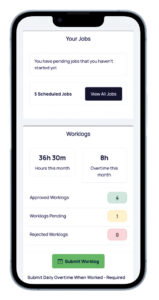
The system is designed to help contracting firms monitor worklogs and ease the invoicing process, or enable farms to keep track of work completed and get an overview of the business. “Workers submit their worklogs through the mobile app,” says James. “The system is similar for both farm and contracting work, but if it’s specified as contracting work, the worklog will automatically be transferred to an invoicing function that can be checked by the owner.”
The pair say that you can get more from the app, the more you put into the set-up. Farms and fields can be added, as can crops, and the system will remember what crop is allocated to each block of land until a manager with permissions changes this. Machinery can be listed, and costings can be assigned to each operation – either as a contracting charge to be invoiced, or as a cost to the business to help farms monitor their expenditure.
When a task is completed, the operator fills in the worklog, using drop down menus to choose the farm, the field, machinery used and the operation. The area covered, time taken, and the number of breaks can be filled in (with the breaks automatically deducted from the invoice if its contracting work), and the amount of fuel used is inputted. Again, if the fuel is supplied by the customer, this can be toggle,d and the system will automatically remove this from the invoice, but the data on fuel usage will be saved for Yokit’s overview functionality.
 A function that is unique to the system is the ability to self-invoice when self-employed operators are on staff. “Rather than waiting for an invoice months down the line, you can convert an operator’s worklog into an invoice for the business, check it and then send it to the operator,” explains John. “It means that you’re paying self-employed workers in a timely manner, and have accurate logs of exactly what has been done.”
When worklogs come in, Yokit will automatically combine data either by operator – handy for self-invoicing – or by job type. “If you’ve got a field to plough, but due to conditions or the size or shape of the field, you have to go back to the site multiple times, the system will automatically combine the ploughing worklogs for easy invoicing, but will also provide a breakdown for the customer,” says John.
Monitoring information
The software has been rounded out to handle tasks from start to finish. Essentially working like the worklog function in reverse, managers can create tasks, including the machinery required, farm and field information, and send these to relevant team members. These can then be marked as in process and completed in the same way that worklogs are inputted.
Should an operator forget to submit a worklog, the app will send a push notification after 24hrs to remind them. This means that information comes into the office in a timely manner. To ensure accuracy, submitted worklogs are put into a pending folder, which can be edited if obvious mistakes are made. “It is possible that operators could add an extra 0 when filling in timesheets or fuel usage, and these clear mistakes can be caught before invoicing,” John notes.
Yokit also has basic management functions, including holiday booking. Operators can see the calendar and what time has been booked off, as well as their days remaining to take. It streamlines processes, especially if you have a policy of only allowing a certain amount of people to have time off at the same time. “It also avoids issues where you may say yes to multiple people, only to realise they’ve all asked for the same week,” explains James.
Depending on the amount of information inputted during the setup, Yokit can provide a full overview of the machinery and workers within the business. Pie charts are provided, breaking down area covered by machinery, which gives an idea of the overall value of subsoilers or cultivators – machinery without an hour or area counter. You can also monitor fuel efficiency, which may indicate differences in performance or operator driving style.
“We designed the system to give farmers greater clarity about their business, and ensure that contractors can invoice accurately and in a timely manner, even during busy periods,” says James. “When we were busy, and I was driving the potato harvester, when I got in at night, I was able to invoice customers in a matter of minutes from the sofa. It’s a weight off your mind because you know that the office work is being done as well.”
Yokit has a tiered pricing structure, based on the number of team members. It costs £25/month for up to two team members, £50/month for up to five, £75/month up to 11 and £150/month for up to 25 workers. Prices exclude VAT and bespoke quotes can be provided for larger teams.