

Farm diversification is nothing new, but continued cost pressure and issues around funding makes new income streams far more appealing. We look at what to consider, the pros and cons of several popular options, and the effect on the existing farming business.
Start with the customer, not the building. That’s the key advice from Kate Lord, director of tourism, leisure and events at Savills. “You might have the ideal space on the farm for diversification, but you can’t build it and hope people will come.”
Instead, she recommends market research, looking at the local area and seeing what diversifications are working well and where there might be gaps.
“It might be that there are other businesses in the area that need a venue, and this could help to de-risk your investment.”
When speaking with farmers looking to diversify, Kate says she encourages two exercises:
- If there were no constraints, what would you do? “This gives you an idea of what you are genuinely interested in, and diversifications will not work if you don’t have the interest and passion to make them work.”
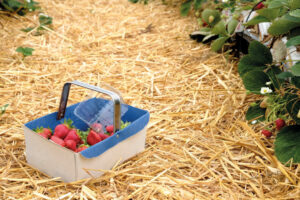
- Can you test the diversification with minimal expenditure? “Take a farm shop as an example. Can you start with a box at the end of a driveway, or perhaps a pop-up to coincide with other events? This can bypass a lot of the regulations needed for a permanent addition and give you an idea of the demand.”
Business plan
A business plan is key to the success of any diversification. Kate says this will not just consider the potential income, expense and growth of the idea, but also the viability based on external factors.
“If you’re looking to set up a public-facing enterprise, your location will play a key part,” she says. “If you’re on the side of an A-road, you have a level of visibility that can help generate trade.
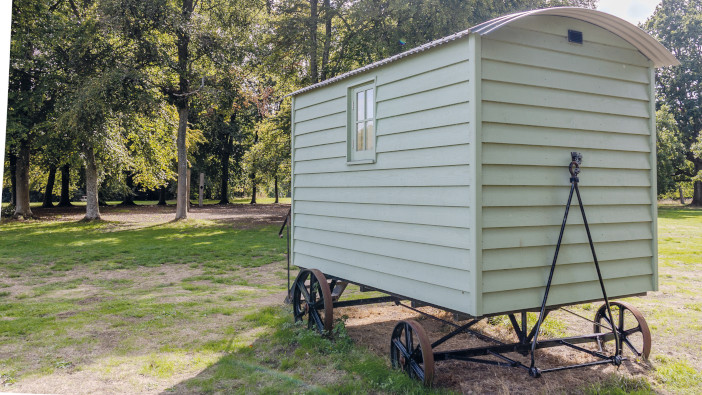
“If your farm is located in the middle of nowhere, with narrow lanes as the only entrance point, access will be much more difficult, and perhaps there are other options available to you, such as glamping or wellness retreats
where the customer is actively looking to escape the hustle and bustle.”
She adds that connectivity is no longer the issue it used to be, thanks to the availability of systems such as Starlink, but the cost should also be considered if wifi is going to be required.
The plan should include variability in demand. Pop-up events such as maize mazes, pumpkin patches and pick-your-own might bring in a surge of income, but they are short-term and labour-intensive. The leisure sector can be lucrative, but it requires giving up weekends and holidays, and the peak season can clash with peak farming times.
A key consideration should be where opportunities lie to de-risk diversifications, or even make diversifications work when the farmers are not keen on dealing with the public.
“It’s leveraging what is there already. If you have an empty farm building, perhaps there are local businesses looking for a base,” Kate explains. “Or if you are looking at seasonal pop-ups, perhaps there are food trucks that can join the event and turn it into something more appealing to a wider audience, with a percentage of the takings coming into the farm without the investment.”
Opportunities for the bold
Kate concludes that while farm incomes are a concern now, this provides opportunities for those with capital and a good idea.
“If you look at Covid, it felt like the whole country was coming to a standstill, but out of that we saw a boom in staycations, glamping and wellness retreats,” she says. “A SWOT [strengths, weaknesses, opportunities and
threats] analysis might help identify threats and opportunities in those cases, reduce the surprises down the line and turn a challenge into an opportunity.”
Ideas for a new generation
Farm business consultant Carrie Marshall sees a lot of diversifications being driven by a new generation. “Young people are coming back to the farm and finding there isn’t the work there to support them, or perhaps not having the same interest in the day-to-day agricultural operations,” she says.
She agrees that any diversification must come from a genuine interest, first and foremost. “At the start, nearly every new venture will be time-consuming and potentially costly. It has to be something you are willing to give up weekends and resources for.”
It’s also worth looking at yourself and whether you are a people person. If you don’t like the idea of people being on the farm, public-facing enterprises should be avoided, because this will not be sustainable in the long term.
Plans should begin by looking at what is already available. This could be a building that is being underused or friends and family who may be willing to help. Location is also key; not just the local area, but whether you have
good access to the property.
“If you’re located on a major road, it isn’t just the public-facing enterprises that will benefit,” Carries explains. “You could set up an electric charging station, which takes a certain level of investment but could provide regular income from commuters using electric vehicles. This could be hugely successful, especially if you are near a town or village that currently does not offer this service.”
A national view
While the local area will give you an idea of gaps in the market, or enterprises that have reached a saturation point, Carries believes it is important to look further afield. “Taking a national view will give you an idea about potential trends that haven’t reached your locale yet, or new ways to approach an established idea,” she says.
In an age where social media is the main way people discover new activities, she adds that it’s also important to assess the aesthetics of any enterprise.
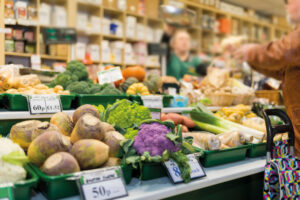
“Influencers and social media users, in general, are always looking for the next picturesque image they can take. Pick-your-own sunflowers, for example, can provide a wonderful backdrop to an Instagram or TikTok reel.”
However, any crop-based diversification must be treated with caution, as it will be subject to the same threats as any other cash crop. “If you’ve established a maize maze and spent money promoting it throughout the year, that maize can still fail,” she says.
“It can represent a lot of money and time invested, with little to no income.”
In the same way, a business plan should evaluate how each enterprise can build on the existing farm – adding to it rather than taking away. “Defra figures show that 72% of farms have some sort of agricultural diversification, and 21% of those are currently unprofitable.
“Diversification should not be seen as a silver bullet, but as an individual enterprise that complements the main farming business while also having its own challenges, peaks and costs,” she says.
Diversification itself does not de-risk a business. It provides an additional income stream that can be subject to the same volatility (for example, enterprises that build on farm produce, such as farm shops and pick-your-owns) or is subject to different peaks and market issues.
“Staycations and glamping were a very profitable business for many people after Covid, but the cost of running these has increased, meaning that potential customers are now looking to go abroad again,” Carrie says. “The
market demand is constantly changing and this needs to be taken into account.”
She points to popular diversifications such as dog walking fields, paddle courts and wellness retreats. “They have a lot of benefits, but are extremely popular at the moment, so when that bubble bursts, or there is a new trend, there is a risk that a lot of these businesses will have to pivot.”
Enterprise stacking
While understanding the risks and having an idea of the possible benefits are key to any business plan, Carrie also says farms should have an open mind about enterprise stacking and tie-ups with other local businesses.
“If you take a traditional farm shop idea – once you’ve put in the car park for that, you have space for electric charging, or perhaps to convert another building for leasing to a local business.
“Like with any commercial enterprise, half of the battle is getting people on site, the rest is about keeping them there for as long as possible,” she says.
Multiple enterprises can help spread the cost of the investment and speed up the returns, and if it is possible to work with other local businesses, it can be done while minimising the time, labour or risk required from the farm.
Managing risk
Nigel Wellings, founder and chairman of Acres Insurance, explains that any feasibility or business plan should have insurance liability at its core.
“I have seen businesses leave a conversation with their broker until just before they launch, only to discover that their premiums increase so much that the diversification becomes less feasible,” he says.
A frank conversation with a broker, or your insurance company, if they understand agriculture and the implications of the diversification, will not only highlight areas of cover that need to be addressed, but can also provide advice on how to manage multiple enterprises.
“As a rule of thumb, if the diversification makes up more than 50% of the total farm income, we would recommend splitting the business,” he says. “However, depending on the set-up of the new enterprise, it may be worth considering a limited company or limited partnership to de-risk the main business.”
Public liability, product liability and employers’ liability are key factors to consider when weighing up insurance for a diversification. Nigel says £10m of public liability indemnity should be the minimum, driven up as court payouts have risen, but this could change based on location and the type of diversification.
“If you’re located near a very affluent area, especially one where celebrities may reside, your liability will need to be adjusted,” he says. “However, this shouldn’t be a concern, because the first £10m is generally the most expensive to insure, as it carries the largest amount of risk.”
Dotting the i’s and crossing the t’s
An in-depth conversation may also provide ideas to mitigate the risk. Letting out farm buildings for commercial use can be a relatively low-effort, low-risk enterprise, but it is worth considering whether those renting the building will encounter agricultural machinery.
“If you’re driving tractors past the parking area, with tyres covered in mud and people walking around, then the
perceived risk of injury or damage is going to increase,” Nigel explains. “In these cases, a separate entrance to stop renters and farm equipment from meeting would be a prudent step.”
Similarly, if the diversification includes bringing outside businesses on site, such as food and drink vendors, it is worth protecting yourself by ensuring they have the correct level of insurance, including at least £10m of public liability indemnity. Even in cases where insurance cover isn’t in question, such as hosting a trade show, it is worth having a conversation about your policy.
“If in doubt, speak to your insurer,” says Nigel. He adds that certain diversifications are considered more high-risk than others. Some will not be surprising – operating a four-wheel-drive track or a dirt bike course – but any operation involving waste handling can also come with a hefty insurance premium, and this needs to be considered carefully.
The personal cost
Nigel says he is hugely impressed by the ingenuity of the industry, which has found ways to diversify and
secure incomes despite the increasing challenges facing agriculture. This does not just include non-agricultural enterprises, but also large arable units looking to diversify within agriculture, including contract rearing and
equestrian operations.
However, he warns that care should be taken to ensure that one person is not taking on too much. Diversification should not be a detriment to the existing farming business, just as the farm should not use diversified enterprises as a crutch.
“In a lot of cases, the most successful diversifications work because someone – normally from the next generation on the farm – is in control and focuses 100% on that enterprise,” he says. “One person running multiple enterprises is rarely sustainable, as there are only so many hours in the day, and farming is already more than a
full-time job.”