


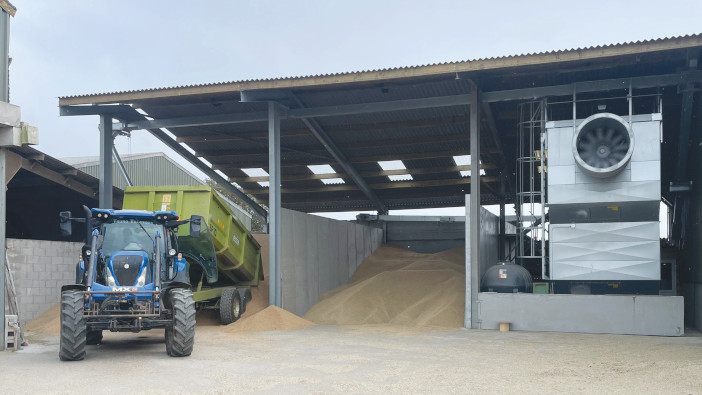
With harvest just around the corner, we spoke to McArthur BDC about maintaining grain handling and drying systems to minimise problems at peak season
Pressure is always on when harvesting comes around, and with grain handling equipment running in the background, the focus will often be on the harvester, the tractors, and the trailers that are getting the crop off before the rain starts. Yet, a dryer breaking down or handling systems wearing can cause significant headaches and bring operations to a standstill.
While Scott McArthur, project division director, acknowledges that many will have a warranty or service agreement, which includes a winter checkup of the equipment, this doesn’t mean that there aren’t plenty of components that should be checked frequently to ensure problem-free running. “A lot of these points will apply to those running batch or continuous flow driers, and scale doesn’t really impact the type of checks, just the amount,” he says.
Maintaining safely
“It’s absolutely vital that farmers complete safety checks before interacting with any moving parts,” Scott says. “This includes isolating the machine to make sure that it cannot start up while you’re working. There should also be a clear plan in place, including the areas of the machinery that will be accessed and who is going to be doing the job.”
He adds that because farms are running with minimal labour, it’s likely these checks will be done by a lone operator. This means that others on the farm should be aware of where that operator is and check up on them to ensure that they are okay.
“You should take steps to protect yourself. Be aware of confined spaces where access can be difficult if you have an accident, such as in pits or silos. Make sure there is a plan in place for assistance if you cannot get out of the space alone.”
Cleaning out
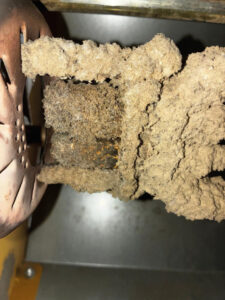
Once all the safety checks have been completed, Scott says that the first task should be to clean out the plenum chamber or grain columns. Removing chaff and straw will not only help the machine run more efficiently but will minimise the fire risk during operation. “This shouldn’t just be done between harvests, but frequently throughout the season, as those with high admix levels in their crops will find combustible material building up quickly in the bottom of the plenums,” Scott says.
This can be followed up with a visual check of the end of the conveyors, or at the bottom of the bucket elevators to ensure that there are no grains remaining. Scott notes that this would typically be done at the end of each harvest, but it’s a quick check to be done during any maintenance, as leftover grains can sprout and cause blockages or become corrosive if there is moisture present.
“Any corrosion will weaken chains, causing them to break or jump off the sprocket when the system is started,” he says.
Once areas where material is deposited are cleaned, Scott recommends checking the combustion head. A build-up of dust can prevent the burner from igniting, which won’t cause significant delays, but checking at the beginning and end of each season will keep everything moving. The burner’s photocell – which detects light to verify that the flame is there – should also be wiped clean. If this is too dirty, the machine will shut down.
Another easy win is to blow away dust that has built up around motor cooling fins to prevent them from overheating.
“Whilst these checks are taking place, you should be looking to see if other maintenance or repairs are required.
Wear and tear
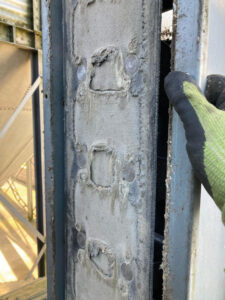
After cleaning, the next step is to check the chains and sprockets throughout the system. Checking full lengths of chain can be an arduous task, so Scott recommends checking key areas where wear will be more obvious.
“At the sprockets, you’ll be able to see any obvious wear, including the sprocket itself and the shaft. If everything looks good here, there probably isn’t any reason to uncover the full chain. Sometimes it’s simply a case of re-tensioning the chain.”
Where there are belts, these should be checked to make sure that they are running in the centre of the pulley and are well-tensioned. “Regular checks like this can stop unnecessary rubbing and wear, and extend the overall life of the components.”
On a batch or mobile drier, it’s also important to visually inspect the auger – ensuring that all the flights are in good condition. Scott says that where the grain is picked up is the area that is exposed to the most wear, so if this looks fine, then the rest of the auger should be fine.
“Individual flights can often be replaced, so it’s worth noticing wear early and avoiding the cost of a full auger later down the line,” he advises.
While more of a concern for growers using older systems, Scott also recommends looking over transmission components; checking bearings and shafts for play, ensuring chains are lubricated and tensioned, and ensuring belts have no nicks or cracks.
Calling in the specialists
Scott says that it is likely that most farms will have people with sufficient mechanical knowledge to perform the above checks. The final point is to ensure that all guards and protective equipment are put back in place once any maintenance is completed. “Harvest is a frenetic time, and accidents happen in the blink of an eye, so putting those guards back in place will protect everyone in the yard,” Scott explains.
Once this is done, turning on the fans and the burner will help check that the flame ignites as it should. Scott says that any issues with the flame itself – excess smoke or a change in the colour – will be obvious to experienced grain drier operators, and they should call in a specialist to check these issues. There is no guarantee all combustion problems can be recognised like this, and a professional burner check as a minimum is strongly advised.”
When it comes to a full service of the machine, technicians will check the fuel systems and air manifolds to ensure a balanced flame. They will also ensure that the internals of the burner are clean; for example, LPG will leave behind a black, tar-like substance. The electrics will also be tested, as well as the sensors throughout the machine, including temperature probes and blockage sensors.
“Our newer machines and systems are designed to make maintenance as easy as possible,” Scott concludes. “But we have machines that are more than 30 years old still operating, and regular checks help prolong the working life. If there are recurring problems, you can speak to your supplier, who may recommend an additional component, which might include retrofittable upgrades.”