


Farm Contractor & Large Scale Farmer
    Twitter LinkedIn
    • FREE Email Newsletters
    • About Us
    • Advertise
    • Subscribe
    • Contact Us
    Twitter LinkedIn
    Podcast
    Farm Contractor & Large Scale Farmer
    • News
      • Arable & Agronomy
      • Dealership News
      • Environmental Land Management Scheme/Policy
      • Event News
      • Health & Safety
      • Machinery
      • People
      • World News
    • Farm Machinery
      • Amenity & Maintenance
      • Cultivations
      • Drilling
      • Grassland Equipment
      • Harvesting
      • Muck & Slurry
      • Sprayers
      • Telehandlers
      • Tractors
      • Tractor of the Year
      • Tyres & Tracks
      • Whatever happened to?
    • Precision Farming
    • Markets & Policy
    • Profiles
      • National Arable and Grassland Awards
      • Company Profiles
      • Reader Profiles
    • Livestock
      • Beef
      • Dairy
      • Sheep
    • Magazines
      1. September 2026
      2. August 2026
      3. 2026 Drills and Seeds supplement
      4. July 2026
      5. June 2026
      6. May 2026
      7. April 2026
      8. March 2026
      9. 2026 Tyre Developments supplement
      10. February 2026
      11. January 2026
      12. December 2025
      13. November 2025
      14. 2025 Agritechnica preview
      15. October 2025 issue
      16. September 2025 issue
      17. August 2025 issue
      18. 2025 Drills and Seeds supplement
      19. July 2025 issue
      20. June 2025 issue
      21. Cereals event guide 2025
      22. May 2025 issue
      23. April 2025 issue
      24. March 2025 issue
      25. 2025 Tyre Developments supplement
      26. February 2025 issue
      27. National Arable and Grassland Awards supplement
      28. January 2025 issue
      29. December 2024 issue
      30. November 2024 issue
      31. October 2024 issue
      32. September 2024 issue
      33. August 2024 Issue
      34. 2024 Drills and Seeds supplement
      35. July 2024 Issue
      36. Cereals Supplement
      37. June 2024 Issue
      38. May 2024 Issue
      39. April 2024 Issue
      40. Tyres and Tracks Supplement
      41. March 2024 Issue
      42. National Arable & Grassland Award – Meet the Finalists
      43. February 2024 Issue
      44. January 2024 Issue
      45. December 2023
      46. Agritechnica Preview Supplement
      47. November 2023
      48. October 2023
      Featured

      September 2026 issue available now

      By Matthew TiltSeptember 1, 2026
      Recent

      September 2026 issue available now

      September 1, 2026

      August 2026 issue available now

      August 2, 2026

      2026 Drills and Seeds supplement available now

      August 1, 2026
    • Events
    • Podcast
    Farm Contractor & Large Scale Farmer
    Arable & Agronomy

    Dry conditions complicate barley disease control

    Matthew TiltBy Matthew TiltApril 29, 20253 Mins Read
    Facebook Twitter LinkedIn Email

    While overall disease pressure may be lower after the driest March in 60 years, and a dry April, short-term stresses and nutrient deficiencies caused by the lack of rain could increase the risk of certain diseases in barley.

    This is the warning of Hutchinsons’ head of integrated crop management, David Howard, who says: “Crops remain variable across the UK, largely based on the state of soils at drilling, and the weather received over winter.

    “Prolonged cool nights and dry weather have extended early growth stages, but with daytime temperatures spiking into the high teens, some barley crops are now moving rapidly towards T1.”

    He adds that plant defences may be lower due to the current conditions, so growers need to assess disease risks in individual crops.

    A variable picture

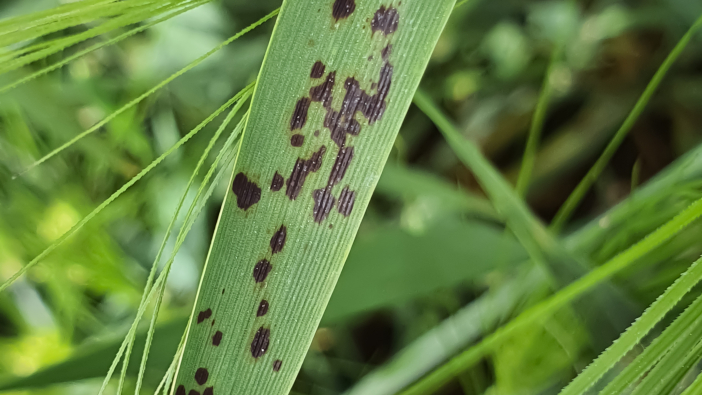
    Reports from the southwest suggest that ramularia symptoms are being seen earlier, especially on light soils or in crops with significant stress.

    “Mildew is also widespread, especially in crops stressed by poor weather, high nitrogen levels, or dry weather.”

    However, net blotch and rhynchosporium pressure has been lower than in previous years, while cooler temperatures so far have subdued brown rust.

    “Barley grows rapidly during this time, adding biomass quickly and relying heavily on lower leaves, which contribute significantly to green area index. Barley’s lower leaves are larger and play a more prominent role in photosynthesis alongside stems and ears, unlike wheat, where upper leaves dominate yield contribution.

    “Retention of tillers is also essential in barley to maintain yield potential, therefore getting disease control right and reducing plant stress at this early timing is key.”

    Combining SDHI and azole products can reportedly provide robust activity against multiple diseases, however David notes that growers should be mixing multiple modes of actions and alternative actions to mitigate resistance.

    Net blotch strains resistant to SDHIs and strobilurins are becoming more common, for example, although there is differential control between strobilurins, with pyraclostrobin being less affected than others, he notes.

    For ramularia, the most active product is now pydiflumetofen, so should be considered where significant disease is already confirmed, he advises. If not, the product is best kept for T2, where ramularia is more commonly seen. Another option in high-pressure situations is mefentrifluconazole, and he also suggests adding folpet, or a biostimulant such as Scyon, for consistent protection.

    Where mildew needs controlling, cyflufenamid is effective, but he reminds growers to avoid consecutive sprays of cyflufenamid to prevent resistance. “For moderate cases, consider prothioconazole-based products.”

    Benzovindiflupyr, tebuconazole and strobilurins such as pyraclostrobin, are all options for brown rust, but tailor choices to specific situations and the need for curative control and/or lasting protection, he says.

    He notes that if T0 applications were recently applied, growers have the flexibility to adapt the T1 timing to GS 31/32, but if no T0 was applied, the earlier GS 30/31 timing will be essential and higher dose rates may be needed to improve curativity where required.

    Tweet
    Share
    Share
    Pin
    Share. Facebook Twitter LinkedIn Email
    Previous ArticleStihl launches Master Technician Course
    Next Article ADR announces new US headquarters to strengthen market presence
    Matthew Tilt
    • Twitter
    • LinkedIn

    Machinery editor for Farm Contractor & Large Scale Farmer. Matt has worked as an agricultural machinery journalist for five years, following time spent in his family’s Worcestershire contracting business. When he’s not driving or writing about the latest farm equipment, he can be found in his local cinema, or with his headphones in, reading a good book.

    Read Similar Stories

    Autumn reseeding could ease spring forage woes

    September 10, 2026

    Every bale matters as straw prices surge

    September 10, 2026

    De Sangosse and ADAS launch new phosphate stewardship hub

    September 1, 2026
    Most Read Stories

    Autumn reseeding could ease spring forage woes

    September 10, 2026

    Every bale matters as straw prices surge

    September 10, 2026

    British National Ploughing Championship gears up for 75th anniversary

    September 10, 2026
    Farm Contractor & Large Scale Farmer

    The UK's leading agricultural machinery journal

    Twitter LinkedIn
    © 2024 MA Agriculture Ltd, a Mark Allen Group company

    Privacy Policy | Cookies Policy | Terms & Conditions

    • Farmers Weekly
    • AA Farmer
    • Poultry News
    • Pig World

    Type above and press Enter to search. Press Esc to cancel.