


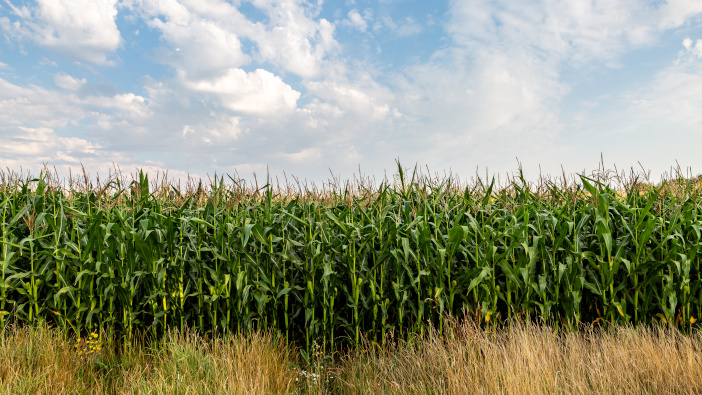
At an event held by Hutchinsons, maize grown for biogas was the focus, with advice on how to incorporate it into existing rotations and budgets
Maize remains the preferred crop for anaerobic digester sites, with 145 sites listing maize as the feedstock and 272 listing energy crops in general. According to Peter Brundle, seeds manager at Hutchinsons, maize offers the best methane levels with the least amount of hassle for growers.
“Beet can work, but it’s more difficult to handle after harvest, grass offers a lower methane yield and rye can work well as a partner crop to maize, but doesn’t offer a break to the growers in the same way,” he explains.
But while there is a clear market for energy maize in the UK, it remains a complex market. There is between 240,000 and 250,000ha grown in the UK, but we are still a small player globally, and no maize seed is grown here, meaning we rely on international breeders. Due to our cool maritime climate, growers require different characteristics, with only the south and south east suitable for later varieties, grown elsewhere.
Peter noted that the Descriptive List is also tricky to decipher, with many issues with the data contained. “Data is not independently collated but sent in by the breeders,” he says. “There are several companies missing, and the 2026 List does not include 2025 data – it was released before harvest was completed.”
This highlights several problems. 2024 was one of the wettest years on record, whereas 2025 was one of the driest. Without the 2025 data considered within the List, it becomes difficult to assess how varieties will stand up to extremes in weather.
He noted that as seed manager for Hutchinsons, with national responsibilities over energy crops, his own list of recommended varieties is based on UK trials and includes those relegated to the second-choice list, as well as longstanding varieties that still offer good yield performance.
“We base it on regional feedback, including the heat units required to reach maturity and potential yield,” he explains. “The fact is that we’re still in the early stages of what we can achieve with maize. In the last 20 years, we’ve seen average yields increase by nearly 4t/ha, and we’re nowhere near the plateau we’ve seen in other crops.”
As for whether other energy crops could replace maize, or be grown as a break in other rotations, he concluded that, currently, there is nothing that can offer the same level of biomass as maize. “Hybrid rye can produce better yields than second wheat, but doesn’t provide a break, and other options like triticale and silphium just cannot match maize for output.”
Boosting gross margins
Leo Page, a farm business consultant in Hutchinsons’ Farm Business Consultancy team, headed up the next part of the event, which explored gross margins and where maize could help or hinder this.
He said that the reduced income from farm support, mixed with stagnating commodity prices, higher borrowing rates and an increase in costs meant that growers had to think carefully about their fixed costs. “This is where the game is won and lost now,” he explains.
When it came to adding energy maize to the rotation, several questions needed to be asked:
- Would it provide a better break than oilseed rape, a Sustainable Farming Incentive option, or beans?
- How far the farm is from the plant, and how haulage costs may affect profitability
- How the variety will impact t/ha and dry matter content
“You really want to keep fixed costs below £900/ha and aim for a 5% reduction where possible, so machinery costs and labour need to be considered as well,” he explains.
Machinery and labour could come into question when contractors are used for maize establishment and harvesting. This may lighten the workload and make it unsustainable to keep staff levels where they are, and it might mean that machinery size must be reconsidered if cereal ground is being replaced with energy crops. Similarly, it may add costs to the system, with remedial cultivations required late in the autumn, or in the spring if weather conditions are not favourable.
The possible impact on soil health may also be a factor, especially as weather patterns become more extreme, which may not align with the long-term plans for the business.
“Most importantly, you need to have conversations with the digesters in your area,” he concludes. “One mile of haulage can equate to 60p/t off the price of the crop – around £25/ha in an average crop, and the cost will vary based on the dry matter. It’s vital that growers understand this and base their variety choice on what will provide the safest possible return.”