

Farm Contractor & Large Scale Farmer
    Twitter LinkedIn
    • FREE Email Newsletters
    • About Us
    • Advertise
    • Subscribe
    • Contact Us
    Twitter LinkedIn
    Podcast
    Farm Contractor & Large Scale Farmer
    • News
      • Arable & Agronomy
      • Dealership News
      • Environmental Land Management Scheme/Policy
      • Event News
      • Health & Safety
      • Machinery
      • People
      • World News
    • Farm Machinery
      • Amenity & Maintenance
      • Cultivations
      • Drilling
      • Grassland Equipment
      • Harvesting
      • Muck & Slurry
      • Sprayers
      • Telehandlers
      • Tractors
      • Tractor of the Year
      • Tyres & Tracks
      • Whatever happened to?
    • Precision Farming
    • Markets & Policy
    • Profiles
      • National Arable and Grassland Awards
      • Company Profiles
      • Reader Profiles
    • Livestock
      • Beef
      • Dairy
      • Sheep
    • Magazines
      1. August 2026
      2. 2026 Drills and Seeds supplement
      3. July 2026
      4. June 2026
      5. May 2026
      6. April 2026
      7. March 2026
      8. 2026 Tyre Developments supplement
      9. February 2026
      10. January 2026
      11. December 2025
      12. November 2025
      13. 2025 Agritechnica preview
      14. October 2025 issue
      15. September 2025 issue
      16. August 2025 issue
      17. 2025 Drills and Seeds supplement
      18. July 2025 issue
      19. June 2025 issue
      20. Cereals event guide 2025
      21. May 2025 issue
      22. April 2025 issue
      23. March 2025 issue
      24. 2025 Tyre Developments supplement
      25. February 2025 issue
      26. National Arable and Grassland Awards supplement
      27. January 2025 issue
      28. December 2024 issue
      29. November 2024 issue
      30. October 2024 issue
      31. September 2024 issue
      32. August 2024 Issue
      33. 2024 Drills and Seeds supplement
      34. July 2024 Issue
      35. Cereals Supplement
      36. June 2024 Issue
      37. May 2024 Issue
      38. April 2024 Issue
      39. Tyres and Tracks Supplement
      40. March 2024 Issue
      41. National Arable & Grassland Award – Meet the Finalists
      42. February 2024 Issue
      43. January 2024 Issue
      44. December 2023
      45. Agritechnica Preview Supplement
      46. November 2023
      47. October 2023
      Featured

      August 2026 issue available now

      By Matthew TiltAugust 2, 2026
      Recent

      August 2026 issue available now

      August 2, 2026

      2026 Drills and Seeds supplement available now

      August 1, 2026

      July 2026 issue available now

      July 1, 2026
    • Events
    • Podcast
    Farm Contractor & Large Scale Farmer
    Livestock

    Farming insects for sustainable feed

    John SwireBy John SwireApril 23, 20213 Mins Read
    Facebook Twitter LinkedIn Email

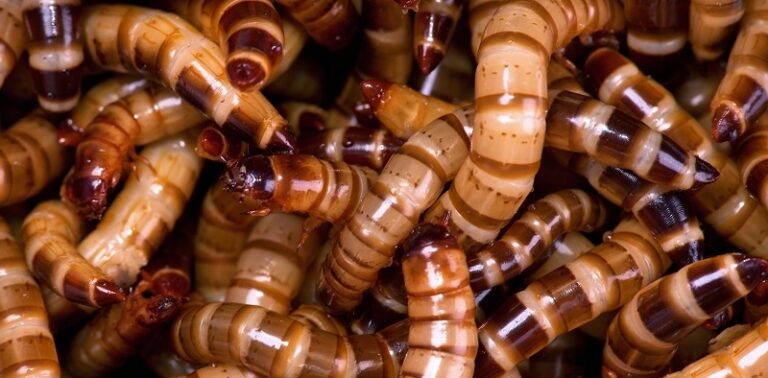
    Farming mealworms to produce animal feed in the UK could be a sustainable and nutritionally valuable answer to environmentally damaging imports of soya, according to Entec Nutrition.

    Packing more protein than steak, mealworms are rich in amino acids, minerals, fats, vitamins and energy, meaning they have the potential to be a valuable feed source to poultry, aquaculture and pets. In addition to this, they can be fed on organic food waste and can be reared using less land and water than their livestock alternatives, making them a more sustainable and environmentally friendly option.

    Having started out rearing insects for use in research, Olivia Champion set up Entec Nutrition in 2018 to cultivate mealworms for poultry, pet and aquaculture feed, in turn helping to reduce the reliance on imported soya bean, fishmeal and krill. 

    The project is currently in the research and development stage, investigating the best conditions for breeding and rearing mealworms, including optimising nutrition and growth rates. The end goal is to create a cost-effective feed source that maximises the desirable traits of mealworms, like short rearing times and increased protein content.

    One key target is to supply as much of the mealworms’ diet as possible with industry by-products, and using funding from an Agri-Tech Cornwall grant Entec is refining methods of using brewers spent grains as a substrate to feed insects. Using circular economy principles, this adds value to industry by-products through insect production, providing a new revenue stream for breweries,” says Emma Theobald, business development and research at Entec Nutriton.

    A separate grant is funding the company’s research into further optimising mealworms’ diets by looking at nutritional geometry in the form of protein, carbohydrate and lipids. These elements need to be optimised to suit different end markets. For example, aquaculture requires low fats while poultry need more. “If the priority for the buyer is cost, then it will be rearing time we focus on most,” explains Ms Theobald.

    The firm is also researching processing of mealworms alongside Campden BRI, which looks specifically into the methods of extracting certain elements like proteins, fats or other compounds.

    In addition, the funding has gone towards exploring packaging, shelf life and potential contaminants – aspects that are essential to getting any products to market. “The industry needs to know how to safely store mealworm products and how long they will last,” says Ms Theobald.

    So why are mealworms better than other insects like soldier flies? The answer lies in density. “You can’t rear soldier flies as densely because they are flying insects, but mealworms are comfortable in close proximity and can be densely packed in, which means that they can be vertically farmed,” she explains. 

    “Though products are already with a small number of partners to test, commercial roll out will require development of production facilities which we are focussing on in 2021.” 

    The next hurdle to cross will be regulatory conditions. At present, EU regulations place serious restrictions on what can be fed to animals that are going into the food chain – which limits what mealworms can be fed. There are also limitations on the form in which mealworms can be fed to other animals like pigs and poultry, explains Ms Theobald. “If insects get approval for poultry feed in the UK, the market would be so undersaturated and demand would far outstrip supply.”

    Tweet
    Share
    Share
    Pin
    Share. Facebook Twitter LinkedIn Email
    Previous ArticleNew Holland combine harvesters win two medals at the SIMA Innovation Awards 2021
    Next Article Salad grower takes delivery of UK’s first Muthing 8.6m flail
    John Swire

    Read Similar Stories

    August 2026 issue available now

    August 2, 2026

    2026 Drills and Seeds supplement available now

    August 1, 2026

    July 2026 issue available now

    July 1, 2026
    Most Read Stories

    First AHDB Harvest Report shows earliest start in at least 20 years

    August 3, 2026

    UTV Products launches purpose-built LED hedgecutting kits

    August 3, 2026

    August 2026 issue available now

    August 2, 2026
    Farm Contractor & Large Scale Farmer

    The UK's leading agricultural machinery journal

    Twitter LinkedIn
    © 2024 MA Agriculture Ltd, a Mark Allen Group company

    Privacy Policy | Cookies Policy | Terms & Conditions

    • Farmers Weekly
    • AA Farmer
    • Poultry News
    • Pig World

    Type above and press Enter to search. Press Esc to cancel.