

Farm Contractor & Large Scale Farmer
    Twitter LinkedIn
    • FREE Email Newsletters
    • About Us
    • Advertise
    • Subscribe
    • Contact Us
    Twitter LinkedIn
    Podcast
    Farm Contractor & Large Scale Farmer
    • News
      • Arable & Agronomy
      • Dealership News
      • Environmental Land Management Scheme/Policy
      • Event News
      • Health & Safety
      • Machinery
      • People
      • World News
    • Farm Machinery
      • Amenity & Maintenance
      • Cultivations
      • Drilling
      • Grassland Equipment
      • Harvesting
      • Muck & Slurry
      • Sprayers
      • Telehandlers
      • Tractors
      • Tractor of the Year
      • Tyres & Tracks
      • Whatever happened to?
    • Precision Farming
    • Markets & Policy
    • Profiles
      • National Arable and Grassland Awards
      • Company Profiles
      • Reader Profiles
    • Livestock
      • Beef
      • Dairy
      • Sheep
    • Magazines
      1. October 2026
      2. September 2026
      3. August 2026
      4. 2026 Drills and Seeds supplement
      5. July 2026
      6. June 2026
      7. May 2026
      8. April 2026
      9. March 2026
      10. 2026 Tyre Developments supplement
      11. February 2026
      12. January 2026
      13. December 2025
      14. November 2025
      15. 2025 Agritechnica preview
      16. October 2025 issue
      17. September 2025 issue
      18. August 2025 issue
      19. 2025 Drills and Seeds supplement
      20. July 2025 issue
      21. June 2025 issue
      22. Cereals event guide 2025
      23. May 2025 issue
      24. April 2025 issue
      25. March 2025 issue
      26. 2025 Tyre Developments supplement
      27. February 2025 issue
      28. National Arable and Grassland Awards supplement
      29. January 2025 issue
      30. December 2024 issue
      31. November 2024 issue
      32. October 2024 issue
      33. September 2024 issue
      34. August 2024 Issue
      35. 2024 Drills and Seeds supplement
      36. July 2024 Issue
      37. Cereals Supplement
      38. June 2024 Issue
      39. May 2024 Issue
      40. April 2024 Issue
      41. Tyres and Tracks Supplement
      42. March 2024 Issue
      43. National Arable & Grassland Award – Meet the Finalists
      44. February 2024 Issue
      45. January 2024 Issue
      46. December 2023
      47. Agritechnica Preview Supplement
      48. November 2023
      49. October 2023
      Featured

      October 2026 issue available now

      By Matthew TiltOctober 1, 2026
      Recent

      October 2026 issue available now

      October 1, 2026

      September 2026 issue available now

      September 1, 2026

      August 2026 issue available now

      August 2, 2026
    • Events
    • Podcast
    Farm Contractor & Large Scale Farmer
    Dairy

    China’s need to turn milk green

    John SwireBy John SwireFebruary 7, 20183 Mins Read
    Facebook Twitter LinkedIn Email
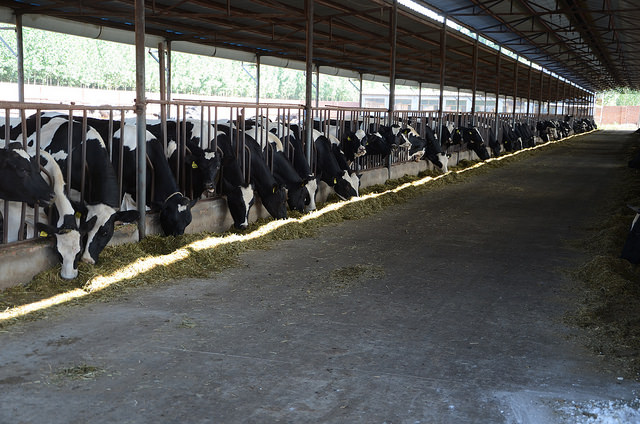
    Dairy farm 1: credit Wang Xuan

    Milk consumption globally is projected to increase 60% over the 40 years to 2050, with the world’s major exporters in the EU, New Zealand and the US struggling to meet the demand sustainably

    China will need more than three times as much milk by 2050 as it produced in 2010 and, without changes to its current supply lines, the demand will lift global greenhouse gas emissions from dairy herds by 35%, expand dairy land by 32% and increase nitrogen pollution from dairy production by 48%.

    “The consequences of sticking to a ‘business-as-usual’ scenario are unthinkable,” says Zhaohai Bai, an associate professor at the Chinese Academy of Sciences and lead author of a paper from a multinational team of environmental scientists published today in Global Change Biology.

    The obvious alternatives are not attractive either, notes Bai. Producing all the extra milk in China alone would add the environmental burden of huge animal feed imports, while importing the extra milk wholesale would simply shift the problems to milk exporting nations.

    “For a more sustainable dairy future globally, high milk demanding regions, such as China, must match the production efficiencies of the world’s leading producers,” says Bai. “Greenhouse gas emissions would rise much more modestly and land use would also contract.”

    The work has drawn on several institutes in China, including the Agricultural University of Hebei and the China Agriculture University in Beijing, Wageningen University in the Netherlands, AgResearch in New Zealand, IIASA in Austria and the University of Bristol and Rothamsted Research in the UK.

    Historically, China consumed little milk (less than 2 kg per person per year in 1961) but increasing prosperity has lifted consumption more than 25 times over the past five decades, leading to China becoming the world’s fourth largest milk producer, with the growth projected to continue.

    “We examined the global impacts of China’s increasing milk production under different scenarios of domestic milk production and importation, addressing the questions using a Nexus Approach,” says Michael Lee, Head of Rothamsted’s North Wyke Farm Platform and Professor of Sustainable Livestock Systems at Bristol Veterinary School.

    Though there is no single universally recognised definition, the Nexus Approach is a strategy that acknowledges the interdependencies of environmental resources, notably water, energy and food, and considers not the individual components but the influencing factors on the broadest scale.

    “Our findings show how changes to animal nutrition and husbandry, as well as improvements in production technologies, can meet the soaring demands for milk worldwide, both more efficiently and sustainably, for producers everywhere,” notes Lee.

    “China has much potential to improve its domestic milk and feed production efficiencies,” says Lin Ma, the paper’s corresponding author and a professor at the Center for Agricultural Resources Research, Institute of Genetic and Developmental Biology, Chinese Academy of Sciences.

    “At the same time, we need to improve manure management to reconnect dairy production and feed production,” adds Ma. “All this would greatly contribute to green milk globally.”

    Tweet
    Share
    Share
    Pin
    Share. Facebook Twitter LinkedIn Email
    Previous ArticleAnimal welfare is concern
    Next Article Robotic feed pusher uses ‘invisible’ transponder technology to move rations closer to cows, freeing up labour and machinery
    John Swire

    Read Similar Stories

    October 2026 issue available now

    October 1, 2026

    JCB accelerates investment after world record success

    September 28, 2026

    Warning as bluetongue cases increase in Wales

    September 1, 2026
    Most Read Stories

    October 2026 issue available now

    October 1, 2026

    Farmers urged to explore alternatives after SFI window closes

    September 29, 2026

    SoilEssentials helps wheelchair-bound farmer back into the combine

    September 29, 2026
    Farm Contractor & Large Scale Farmer

    The UK's leading agricultural machinery journal

    Twitter LinkedIn
    © 2024 MA Agriculture Ltd, a Mark Allen Group company

    Privacy Policy | Cookies Policy | Terms & Conditions

    • Farmers Weekly
    • AA Farmer
    • Poultry News
    • Pig World

    Type above and press Enter to search. Press Esc to cancel.