


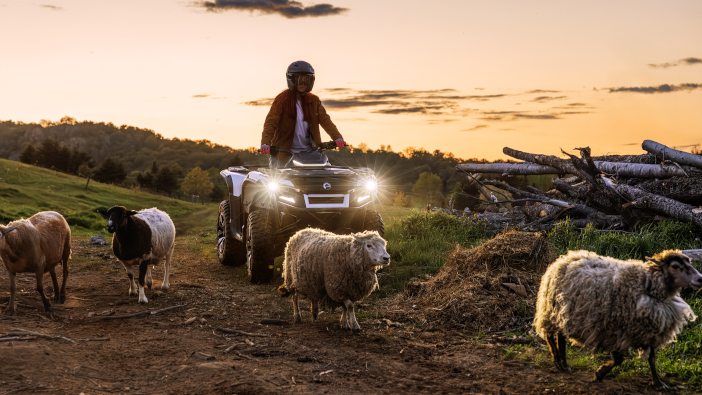
The 14th Farm Safety Week comes after on-farm fatalities remained high in the previous 12 months.
HSE data shows that farming has the poorest safety record of any industry, with high levels of both fatal and life-changing injuries. 22 workers lost their lives in 2025/26, half of whom were over 65. This is one of the highest figures recorded in over a decade.
10% of fatal incidents involved children.
The figures reveal that workers in agriculture, forestry and fishing are seven times more likely to be killed at work than those in construction, and 21 times more likely than the average of all other industries.
However, the Farm Safety Foundation (Yellow Wellies) says that more focus needs to be on the thousands of workers suffering life-changing injuries and ill-health, which impacts their ability to work, live independently and enjoy family life.
Figures show that around 9,000 workers are suffering from work-related ill-health, with 67% linked to musculoskeletal disorders, while an estimated 8,000 non-fatal injuries have occurred in the last five years.
There is some hope. NFU Mutual figures show that claims for farm accidents fell slightly from 894 in 2024/25 to 868 in 2025/26. According to the Farm Safety Foundation, this suggests that sustained training and awareness campaigns are beginning to take effect.
There has been a shift in younger people, with claims involving those under 40 dropping by 3% to 20% of all incidents.
Quality of life
The organisation wants to highlight that behind these statistics are real people and families dealing with the aftermath.
A new survey conducted by the Farm Safety Foundation this year found that the biggest fear on farms may not be dying in an accident, but surviving with a life-changing injury.
Of 408 respondents, 49.7% of those under 40 said that they were more worried about having a disability after an accident, compared to 36.6% who said that they were worried about dying.
Older workers followed a similar pattern, with 51.7% worried about disability, compared to 31.4% worried about death.
Stephanie Berkeley, manager of the Farm Safety Foundation, said: “When we talk about farm safety, fatalities understandably dominate the conversation, but serious injuries can be just as life‑changing. The reality is that there is no such thing as a papercut on a farm and the margin between a near miss, a serious injury and a fatal incident is often frighteningly small.
“A fall from height, an encounter with machinery, a vehicle incident – these don’t always result in death, but they can leave someone living with chronic pain, reduced mobility, disability or an inability to continue working. That impact doesn’t stop with the individual; it affects the family, the farm business and the community as a whole.”
The added heatwave conditions are causing further challenges. Agricultural workers receive up to 10 times more annual sun exposure than those who work indoors, and farming is one of the highest-risk occupations for deaths linked to sun exposure.
With this in mind, the Farm Safety Foundation is urging those working outdoors this week to take simple but potentially life-saving steps:
- Keep a top on when working.
- Wear a hat with a brim or flap to protect the ears and back of the neck.
- Stay in the shade whenever possible, especially during breaks and at lunchtime.
- Use high-factor sunscreen of at least SPF30 on exposed skin.
- Drink plenty of water – little and often and avoid alcohol.
- Take sufficient breaks and watch for signs of fatigue, stress and poor mental health.
- Check skin regularly for unusual moles or spots and speak to a doctor about anything changing in shape, size or colour or anything itching or bleeding.
- Keep machinery clean and well-maintained during harvest.
- Be alert to dust build-up, overheating parts and fire risks.
- Make sure fire extinguishers are accessible and in working order.
Stephanie added: “If we are really serious about making our farms safer, we must broaden the conversation. We must take injuries just as seriously as fatalities and recognise that preventing harm, not just death has to be our goal.
“And we must bring the people behind the statistics into the open, not to alarm, but to connect. Because connection is what changes behaviour.”
NFU urges farmers to prioritise safety
As one of the key supporters for Farm Safety Week, the NFU has urged growers to prioritise on-farm safety practices.
NFU vice-president Robyn Munt said: “These latest figures from the HSE serve as a stark reminder that farm safety is something we must all take seriously. Behind each of these numbers is a person whose life and the lives of their loved ones have been changed forever.
“We know farming can be an intensely pressured job, particularly during harvest when farmers are working around the clock to get crops out of the ground to produce the country’s food. However, even during these extra busy periods it is so important to keep safety at the forefront of our minds.
“The NFU is working with others across the industry to make changes to help reduce the number of deaths and serious injuries happening on farm. Our Take 5, Stay Alive campaign asks farmers to take five minutes to assess potential risks, prevent accidents and protect your mental health, whether that be replacing worn machinery or reaching out to a neighbour.
“Health and safety practices are about far more than ticking a box, they are about keeping you, your employees and even family members out of harm’s way. Remember, nothing on farm is as valuable as you are.”
According to the HSE, the highest number of deaths occurred as a result of working with machinery. The NFU states that this underlines the importance of safe practices.
This includes routine maintenance of vehicles and machinery such as combines, ensuring employees are sufficiently trained to use farming equipment, avoiding shortcuts and assessing risks before undertaking a task and taking sufficient rest periods to stay alert.
 Rethinking ATV safety
As part of Farm Safety Week, Can-Am is urging farmers to rethink ATV safety. The company says that there is no such thing as ‘just a quick ride’ as every journey carries risk.
Safety first is highlighted in Can-Am’s Responsible Rider Charter, which reinforces the importance of wearing the correct protective equipment, including helmets, carrying out vehicle checks, and using ATVS as they are designed to be used.
Can-Am off-road rider safety top tips
- Load it right. Ride it right – Secure and evenly balance everything you are carrying on the ATV, never exceed the ATV’s load capacity and always follow the manufacturer’s recommendations that are in the handbook.
- Stay alert as hazards can appear in a split second – Keep scanning your surroundings for livestock, obstacles, uneven ground and other people and vehicles.
- A two-minute check could prevent a serious incident – Before you start your ATV, inspect it to make sure it’s safe, roadworthy and ready for the job at hand. In addition, preventative maintenance leads to safer machinery and less downtime due to breakdowns
- Smooth is safe – Avoid sudden acceleration or harsh manoeuvres as rapid changes in speed are a common cause of rollovers.
- Dress for the ride, not the weather – Every ride should start with the right PPE, including a helmet, sturdy boots, long sleeves and long trousers.
- Let your body work with the terrain – Shift your weight to stay balanced, lean forward when ascending slopes, move back when descending, select a low gear and use engine braking to maintain control.
- Walk it before you ride it – If you’re working in unfamiliar ground, check the route or location on foot to identify hidden hazards, ruts, ditches or obstacles that could be an issue.
- Expect the conditions to change – Weather can turn quickly. Be prepared to adapt your riding as changing ground conditions can affect grip, stability, towing and carrying loads.
- Know your machine – Your owner’s manual is one of the most valuable safety tools you have. Read it, understand it and refer back to it regularly.
- Set a top speed – Use the DESS key to set a top speed for your ATV that is relevant to the job being carried out.
- Get trained and ride with confidence – Professional training gives you the skills to handle your ATV safely, make better decisions in challenging conditions and reduce the risk of incidents. If you’re new to ATVs or even an experienced rider, completing accredited training through LANTRA, EASI or other accredited training providers is one of the best investments you can make to ensure your safety.