


Farm Contractor & Large Scale Farmer
    Twitter LinkedIn
    • FREE Email Newsletters
    • About Us
    • Advertise
    • Subscribe
    • Contact Us
    Twitter LinkedIn
    Podcast
    Farm Contractor & Large Scale Farmer
    • News
      • Arable & Agronomy
      • Dealership News
      • Environmental Land Management Scheme/Policy
      • Event News
      • Health & Safety
      • Machinery
      • People
      • World News
    • Farm Machinery
      • Amenity & Maintenance
      • Cultivations
      • Drilling
      • Grassland Equipment
      • Harvesting
      • Muck & Slurry
      • Sprayers
      • Telehandlers
      • Tractors
      • Tractor of the Year
      • Tyres & Tracks
      • Whatever happened to?
    • Precision Farming
    • Markets & Policy
    • Profiles
      • National Arable and Grassland Awards
      • Company Profiles
      • Reader Profiles
    • Livestock
      • Beef
      • Dairy
      • Sheep
    • Magazines
      1. September 2026
      2. August 2026
      3. 2026 Drills and Seeds supplement
      4. July 2026
      5. June 2026
      6. May 2026
      7. April 2026
      8. March 2026
      9. 2026 Tyre Developments supplement
      10. February 2026
      11. January 2026
      12. December 2025
      13. November 2025
      14. 2025 Agritechnica preview
      15. October 2025 issue
      16. September 2025 issue
      17. August 2025 issue
      18. 2025 Drills and Seeds supplement
      19. July 2025 issue
      20. June 2025 issue
      21. Cereals event guide 2025
      22. May 2025 issue
      23. April 2025 issue
      24. March 2025 issue
      25. 2025 Tyre Developments supplement
      26. February 2025 issue
      27. National Arable and Grassland Awards supplement
      28. January 2025 issue
      29. December 2024 issue
      30. November 2024 issue
      31. October 2024 issue
      32. September 2024 issue
      33. August 2024 Issue
      34. 2024 Drills and Seeds supplement
      35. July 2024 Issue
      36. Cereals Supplement
      37. June 2024 Issue
      38. May 2024 Issue
      39. April 2024 Issue
      40. Tyres and Tracks Supplement
      41. March 2024 Issue
      42. National Arable & Grassland Award – Meet the Finalists
      43. February 2024 Issue
      44. January 2024 Issue
      45. December 2023
      46. Agritechnica Preview Supplement
      47. November 2023
      48. October 2023
      Featured

      September 2026 issue available now

      By Matthew TiltSeptember 1, 2026
      Recent

      September 2026 issue available now

      September 1, 2026

      August 2026 issue available now

      August 2, 2026

      2026 Drills and Seeds supplement available now

      August 1, 2026
    • Events
    • Podcast
    Farm Contractor & Large Scale Farmer
    Dairy

    MEA advise that chlorine be avoided in final milking equipment rinses

    Meghan TaylorBy Meghan TaylorAugust 4, 20222 Mins Read
    Facebook Twitter LinkedIn Email
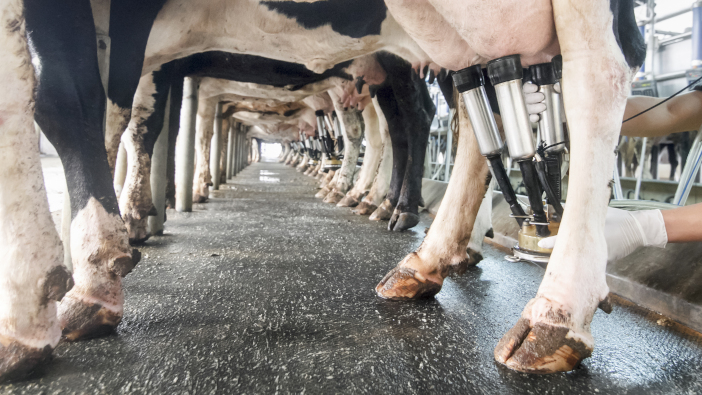
    Row,Of,Cows,Being,Milked

    The latest advice from the Milking Equipment Association (MEA) is that, in the cleaning and disinfection of milking equipment, chlorine should be avoided or replaced in final rinses – to reduce the risk of chlorate residues in milk products.

    Red Tractor standards state that milking equipment should free from chemical residues, which can be accomplished by performing a final rinse of equipment with drinking quality water. Or, the MEA adds, if chemicals are required, chlorine free alternatives such as peracetic acid should be considered.

    MEA chair, John Baines, said: “The risk of chlorate residues is highest in heavily processed products, especially in milk powders and infant formulas; the European Food Safety Authority has advised that exposure to chlorates for long periods of time can lead to iodine deficiencies in infants.”

    As such, “EU Legislation has set a new maximum residue limit (MRL) for chlorates in milk products, to ensure that levels do not exceed 0.1mg/kg.”

    Robotic technology has taken the lead on cleaning without chlorine, using boiling water as an alternative. Acid or alkali can be added to the early stage of the cleaning to prevent fat or mineral deposits, however, high temperatures can disinfect equipment surfaces, so no disinfectant is required.

    “Whilst technology has some of the answers, installation, calibration and maintenance of all milking systems should be carried out according to manufacturer’s guidelines, by Milking Systems Technician Accreditation technicians,” Mr Baines concluded.

    Tweet
    Share
    Share
    Pin
    Share. Facebook Twitter LinkedIn Email
    Previous ArticlePolaris announces new upgrades and colours for 2023 product range
    Next Article Aura: the autonomous diet feeder from Kuhn
    Meghan Taylor

    Journalist. Graduated from the University of Sussex with a degree in English and Art History. When not working I can be found riding my horses on the Ashdown Forest, reading, shopping, or cooking!

    Read Similar Stories

    First cut silage likely to face quality challenges

    April 8, 2026

    New tech aims to cut antibiotics use in dairy herds

    March 2, 2026

    McArthur BDC heads up consortium on to cut methane and soya in the dairy industry

    February 5, 2026
    Most Read Stories

    Autumn reseeding could ease spring forage woes

    September 10, 2026

    Every bale matters as straw prices surge

    September 10, 2026

    British National Ploughing Championship gears up for 75th anniversary

    September 10, 2026
    Farm Contractor & Large Scale Farmer

    The UK's leading agricultural machinery journal

    Twitter LinkedIn
    © 2024 MA Agriculture Ltd, a Mark Allen Group company

    Privacy Policy | Cookies Policy | Terms & Conditions

    • Farmers Weekly
    • AA Farmer
    • Poultry News
    • Pig World

    Type above and press Enter to search. Press Esc to cancel.