


Farm Contractor & Large Scale Farmer
    Twitter LinkedIn
    • FREE Email Newsletters
    • About Us
    • Advertise
    • Subscribe
    • Contact Us
    Twitter LinkedIn
    Podcast
    Farm Contractor & Large Scale Farmer
    • News
      • Arable & Agronomy
      • Dealership News
      • Environmental Land Management Scheme/Policy
      • Event News
      • Health & Safety
      • Machinery
      • People
      • World News
    • Farm Machinery
      • Amenity & Maintenance
      • Cultivations
      • Drilling
      • Grassland Equipment
      • Harvesting
      • Muck & Slurry
      • Sprayers
      • Telehandlers
      • Tractors
      • Tractor of the Year
      • Tyres & Tracks
      • Whatever happened to?
    • Precision Farming
    • Markets & Policy
    • Profiles
      • National Arable and Grassland Awards
      • Company Profiles
      • Reader Profiles
    • Livestock
      • Beef
      • Dairy
      • Sheep
    • Magazines
      1. September 2026
      2. August 2026
      3. 2026 Drills and Seeds supplement
      4. July 2026
      5. June 2026
      6. May 2026
      7. April 2026
      8. March 2026
      9. 2026 Tyre Developments supplement
      10. February 2026
      11. January 2026
      12. December 2025
      13. November 2025
      14. 2025 Agritechnica preview
      15. October 2025 issue
      16. September 2025 issue
      17. August 2025 issue
      18. 2025 Drills and Seeds supplement
      19. July 2025 issue
      20. June 2025 issue
      21. Cereals event guide 2025
      22. May 2025 issue
      23. April 2025 issue
      24. March 2025 issue
      25. 2025 Tyre Developments supplement
      26. February 2025 issue
      27. National Arable and Grassland Awards supplement
      28. January 2025 issue
      29. December 2024 issue
      30. November 2024 issue
      31. October 2024 issue
      32. September 2024 issue
      33. August 2024 Issue
      34. 2024 Drills and Seeds supplement
      35. July 2024 Issue
      36. Cereals Supplement
      37. June 2024 Issue
      38. May 2024 Issue
      39. April 2024 Issue
      40. Tyres and Tracks Supplement
      41. March 2024 Issue
      42. National Arable & Grassland Award – Meet the Finalists
      43. February 2024 Issue
      44. January 2024 Issue
      45. December 2023
      46. Agritechnica Preview Supplement
      47. November 2023
      48. October 2023
      Featured

      September 2026 issue available now

      By Matthew TiltSeptember 1, 2026
      Recent

      September 2026 issue available now

      September 1, 2026

      August 2026 issue available now

      August 2, 2026

      2026 Drills and Seeds supplement available now

      August 1, 2026
    • Events
    • Podcast
    Farm Contractor & Large Scale Farmer
    Dairy

    £1.24 million study into heat stress in cattle

    Matthew TiltBy Matthew TiltApril 27, 20233 Mins Read
    Facebook Twitter LinkedIn Email

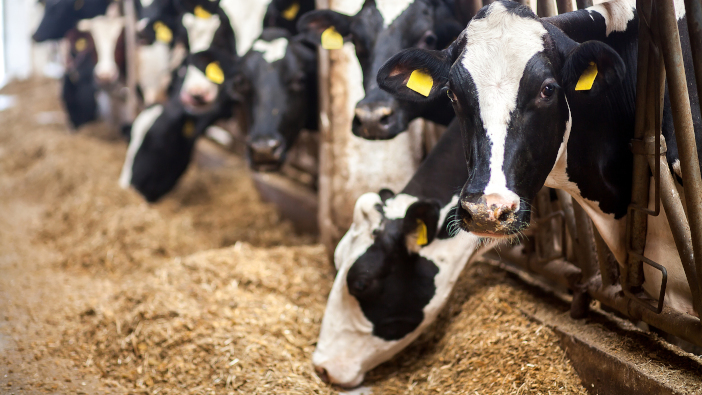
    Should farmers make changes to cattle housing to minimise the risk of heat stress in dairy cows? A new research project aims to address this to ensure sustainable milk production and improve cow welfare as climate change increases temperatures.

    The Universities of Reading, Essex, Cardiff and Writtle University College are collaborating on a £1.24 million BBSRC-funded research project that aims to understand and address the causes of dairy cow heat stress within farm buildings. The project will bring together experts in animal and dairy sciences, mathematical modelling and statistics, and building design engineering.

    Researchers will explore the interaction between temperature, microclimates within farm buildings and cow physiology and behaviour. At high temperatures, dairy cows are known to suffer heat stress, which can reduce milk yield, impact fertility and affect the immune system and overall welfare.

    Chris Reynolds, Professor of Animal and Dairy Sciences at the University of Reading, said: “Heat stress due to climate change could have severe negative consequences for the health and productivity of dairy cows. Lactating cows have a high rate of metabolism, which makes them less tolerant of high temperatures. Research is essential to inform and shape future cow management strategies and building designs.”

    Keeping an eye on the herd

    Research will take place at the University of Reading’s Centre for Dairy Research (CEDAR) and six commercial dairy farms across the UK. Cow behaviour will be continuously monitored using tracking sensors that record movement, activity and space-use for each animal in the herd.

    Detailed observations of the microclimates, including temperature, humidity, air quality and ventilation, will also be obtained and combined with physiological data.

    Cows will adapt their behaviour to cope with high temperatures and humidity. This could include increasing water intake, seeking shade or areas of increased ventilation, or other behavioural responses.

    Edward Codling, Professor of Mathematical Biology at the University of Essex, said: “Our tracking sensors will allow us to analyse how indoor-housed dairy cows respond to, and cope with, heat stress in an unprecedented level of detail. By combining animal tracking data with continuous sensor monitoring of barn microclimates we will be able to model and predict the complex interactions between cow behavioural choices and their housed environment.”

    Zhiwen Luo, Professor in Architectural and Urban Science at Cardiff University, said: “We have to respond to the changing environment and through better understanding of how cows interact with building microclimates, design housing and management systems that minimize heat stress and enable more sustainable dairy systems.”

    First of its kind

    The research is reportedly the first of its kind, using bespoke animal tracking and environmental sensors from industry collaborators Omnisense and Smartbell to model how building design can influence microclimates and cow behaviour.

    The project has support from AHDB (the UK Agriculture and Horticulture Development Board), The Dairy Group, Etex, Innovation for Agriculture, and Map of Ag, as well as Defra (the UK government’s Department for the Environment, Food and Rural Affairs).

    Dr Jonathan Amory, Principal Lecturer in Animal Behaviour and Welfare at Writtle University College, said: “The climate crisis is bringing new challenges to animal welfare. By utilising new technology and working with industry, we can develop innovative solutions for improving livestock management.”

    Tweet
    Share
    Share
    Pin
    Share. Facebook Twitter LinkedIn Email
    Previous ArticleAgronomy exhibitors preview Cereals plots
    Next Article Fendt to showcase connected fleet at Cereals
    Matthew Tilt
    • Twitter
    • LinkedIn

    Machinery editor for Farm Contractor & Large Scale Farmer. Matt has worked as an agricultural machinery journalist for five years, following time spent in his family’s Worcestershire contracting business. When he’s not driving or writing about the latest farm equipment, he can be found in his local cinema, or with his headphones in, reading a good book.

    Read Similar Stories

    First cut silage likely to face quality challenges

    April 8, 2026

    New tech aims to cut antibiotics use in dairy herds

    March 2, 2026

    McArthur BDC heads up consortium on to cut methane and soya in the dairy industry

    February 5, 2026
    Most Read Stories

    Yellow beast from the East

    September 14, 2026

    From farms to solar

    September 14, 2026

    Grooming the clamp

    September 14, 2026
    Farm Contractor & Large Scale Farmer

    The UK's leading agricultural machinery journal

    Twitter LinkedIn
    © 2024 MA Agriculture Ltd, a Mark Allen Group company

    Privacy Policy | Cookies Policy | Terms & Conditions

    • Farmers Weekly
    • AA Farmer
    • Poultry News
    • Pig World

    Type above and press Enter to search. Press Esc to cancel.