


Farm Contractor & Large Scale Farmer
    Twitter LinkedIn
    • FREE Email Newsletters
    • About Us
    • Advertise
    • Subscribe
    • Contact Us
    Twitter LinkedIn
    Podcast
    Farm Contractor & Large Scale Farmer
    • News
      • Arable & Agronomy
      • Dealership News
      • Environmental Land Management Scheme/Policy
      • Event News
      • Health & Safety
      • Machinery
      • People
      • World News
    • Farm Machinery
      • Amenity & Maintenance
      • Cultivations
      • Drilling
      • Grassland Equipment
      • Harvesting
      • Muck & Slurry
      • Sprayers
      • Telehandlers
      • Tractors
      • Tractor of the Year
      • Tyres & Tracks
      • Whatever happened to?
    • Precision Farming
    • Markets & Policy
    • Profiles
      • National Arable and Grassland Awards
      • Company Profiles
      • Reader Profiles
    • Livestock
      • Beef
      • Dairy
      • Sheep
    • Magazines
      1. June 2026
      2. May 2026
      3. April 2026
      4. March 2026
      5. 2026 Tyre Developments supplement
      6. February 2026
      7. January 2026
      8. December 2025
      9. November 2025
      10. 2025 Agritechnica preview
      11. October 2025 issue
      12. September 2025 issue
      13. August 2025 issue
      14. 2025 Drills and Seeds supplement
      15. July 2025 issue
      16. June 2025 issue
      17. Cereals event guide 2025
      18. May 2025 issue
      19. April 2025 issue
      20. March 2025 issue
      21. 2025 Tyre Developments supplement
      22. February 2025 issue
      23. National Arable and Grassland Awards supplement
      24. January 2025 issue
      25. December 2024 issue
      26. November 2024 issue
      27. October 2024 issue
      28. September 2024 issue
      29. August 2024 Issue
      30. 2024 Drills and Seeds supplement
      31. July 2024 Issue
      32. Cereals Supplement
      33. June 2024 Issue
      34. May 2024 Issue
      35. April 2024 Issue
      36. Tyres and Tracks Supplement
      37. March 2024 Issue
      38. National Arable & Grassland Award – Meet the Finalists
      39. February 2024 Issue
      40. January 2024 Issue
      41. December 2023
      42. Agritechnica Preview Supplement
      43. November 2023
      44. October 2023
      Featured

      June 2026 issue available now

      By Matthew TiltJune 1, 2026
      Recent

      June 2026 issue available now

      June 1, 2026

      May 2026 issue available now

      May 1, 2026

      April 2026 issue available now

      April 1, 2026
    • Events
    • Podcast
    Farm Contractor & Large Scale Farmer
    Arable & Agronomy

    ADAMA warns of perfect storm for BYDV

    Matthew TiltBy Matthew TiltApril 15, 20243 Mins Read
    Facebook Twitter LinkedIn Email

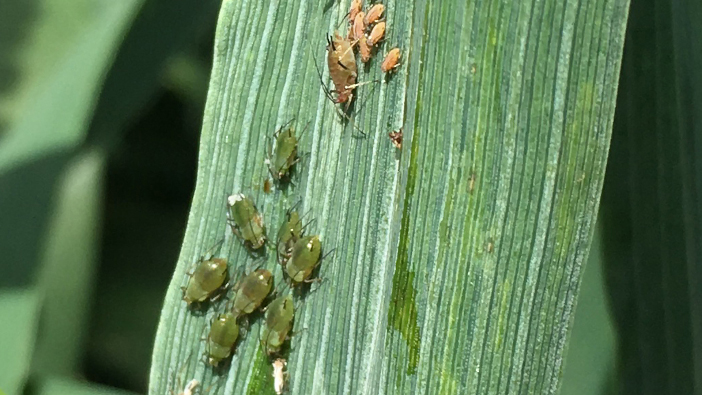
    The mild and wet conditions that have impacted the UK in recent months could provide the perfect conditions for barley yellow dwarf virus (BYDV) in spring barley.

    Dr Bill Lankford, herbicide and insecticide technical specialist at ADAMA, explained that an early aphid migration is predicted to coincide with when crops are at their most vulnerable.

    “In England, the first aphid migration of the year rarely threatens spring barley, as crops are usually far enough ahead that they have advanced beyond their most susceptible 2-5 leaf growth stage,” he said.

    “However, the mild conditions in January, February and March mean temperatures rarely fell below the minus 5 degrees Celsius needed to reduce aphid populations. And, whilst the majority of spring barley would normally be sown and out of the ground by the end of March, large areas are still to be drilled, leaving significant potential for aphids to find and infect new seedlings as soon as they emerge.”

    Dr Bill Lankford

    Modelling work from Rothamsted Research suggests that the first flights of Bird cherry-oat aphid (Rhopalosiphum paid) will take place in the first half of April, while Grain aphid (Sitobion avenae) and Rose-grain aphid (Metopolophium dirhodum) will follow soon after.

    “That’s two to three weeks earlier than normal, with the number of aphids also predicted to be in the top 25% of historical levels,” Dr Lankford said. “As such, there’s a high risk that barley plants could become infected with the BYDV virus almost as soon as they emerge from the seedbed, with subsequent aphid migrations exacerbating the problem by spreading the virus further into the field.”

    To protect yields, and any malting premiums in place, growers are being advised to use a suitable aphicide treatment early in their spray programmes.

    “In Ireland, where the convergence of aphid activity and crop emergence occurs more frequently, yield losses of 0.5-1.0 tonnes per hectare are commonplace in untreated crops, so it’s worth protecting crops from the outset,” Dr Lankford added.

    If the aphid population threshold is exceeded, the best line of defence is to apply an insecticide when the crop is at growth stage 13-14. Dr Lankford recommended products that have a lower impact on beneficials, which will further help to control pests.

    “In situations where a pyrethroid pesticide is deemed necessary, MAVRIK® (240 g/litre tau-fluvalinate) not only provides fast-acting contact control of aphids in cereals, but also has a lower residual impact on beneficial insects compared to other pyrethroids,” he said.

    “This reduced toxicity enables populations of advantageous insects such as ground and rove beetles, hoverflies, lacewings, ladybirds and parasitic wasps and flies to recover more quickly after crops have been sprayed, therefore ensuring there’s a strong population of predators ready and able to contribute to the control of any subsequent influxes of aphids. MAVRIK also has the added advantage of being very fast-acting which means it halts feeding damage quickly.”

    For more information go to www.adama.com

    Tweet
    Share
    Share
    Pin
    Share. Facebook Twitter LinkedIn Email
    Previous ArticleTIAH to take part in Cultivate conference
    Next Article Growers urged to check ‘Made for SFI’ seed mixes carefully
    Matthew Tilt
    • Twitter
    • LinkedIn

    Machinery editor for Farm Contractor & Large Scale Farmer. Matt has worked as an agricultural machinery journalist for five years, following time spent in his family’s Worcestershire contracting business. When he’s not driving or writing about the latest farm equipment, he can be found in his local cinema, or with his headphones in, reading a good book.

    Read Similar Stories

    Claydon open days highlight benefits of cover and catch crops

    May 19, 2026

    Longcliffe Quarries invests in granulated lime

    May 18, 2026

    De Sangosse to focus on practical measures at Cereals

    May 14, 2026
    Most Read Stories

    Opico adds spot sprayers to product portfolio

    June 1, 2026

    Dammann enters insolvency

    June 1, 2026

    June 2026 issue available now

    June 1, 2026
    Farm Contractor & Large Scale Farmer

    The UK's leading agricultural machinery journal

    Twitter LinkedIn
    © 2024 MA Agriculture Ltd, a Mark Allen Group company

    Privacy Policy | Cookies Policy | Terms & Conditions

    • Farmers Weekly
    • AA Farmer
    • Poultry News
    • Pig World

    Type above and press Enter to search. Press Esc to cancel.