
 Recognising an outstanding agronomist committed to empowering growers with expertise and enthusiasm, as well as showing dedication to ongoing education and professional development
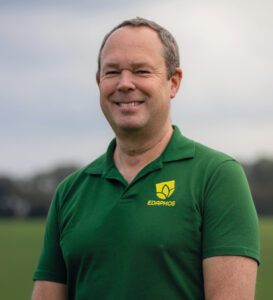
Richard Boldan – Edaphos
Having run the family arable farm for more than 20 years before transitioning to agronomy, Richard Boldan (Edaphos) brings real world experience to his work, working with 21 clients (3,765ha) who he describes as progressive and interested in reducing their impact on the environment. Optimising fertiliser use is key, with organic products supplementing the nutrient requirements, combined with focus on crop and soil health.
To control grassweeds, he has encouraged growers to integrate livestock into their arable rotations to boost soil health, but notes that he aims to be flexible with advice to respond quickly to extremes in weather. He states that the ideal is to prevent problems where possible, addressing the causes rather than the symptoms, with Integrated Pest Management and Integrated Farm Management underpinning his work.
Chris Taylor – Down to Earth Agronomy Limited
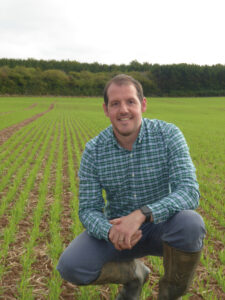 Independent agronomist Chris Taylor (Down to Earth Agronomy Limited) works with 26 farms across Wales and the west of England, covering more than 4,000ha of combinable crops, forage and grassland with a focus on delivering margins for financial sustainability, while keeping an eye on environmental resilience. He aims to give holistic advice, with attention to detail both for crop health and overall business management.
New technology has been utilised, including drones with Skippy Scout analysis software, and the Yara N-Tester, to monitor nutrient requirements and efficiency, create maps for seeding and chemical application, and to monitor whole field and part-field performance.
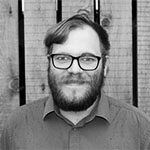
Peter Waltham – Agrovista UK
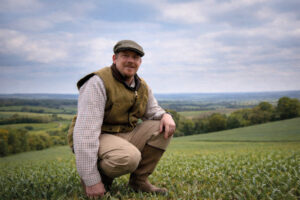 Peter Waltham (Agrovista UK) has a background in biochemistry and molecular microbiology, which he says helps him approach agronomy from a whole system perspective. He advises around 60 customers, covering a diverse range of operations including whole crop forage, niche crops such as basket willow, and large-scale arable businesses.
He aims to guide customers towards regenerative systems, starting with strong varieties and supported throughout the growing season with sap testing, foliar applications and biological inputs to exploit the plant genetics. Peter states that this typically leads to a 50% reduction in synthetic fungicide use. This is bolstered by a focus on soil health, with careful management of fertiliser programmes.
He continues to develop his knowledge by attending industry events and keeping abreast of technological developments both from third party companies and Agrovista, as well as refreshing his scientific experience by following peer reviewed journals.
The 2026 National Arable and Grassland Awards will be handed out in a ceremony at the end of the first Agronomy Exchange event. For more information, head to www.agronomyexchange.com