



 The winner must show a clear dedication to reducing the carbon footprint and optimising resources. Long-term plans should include boosting soil health and biodiversity for the overall sustainability of the farm
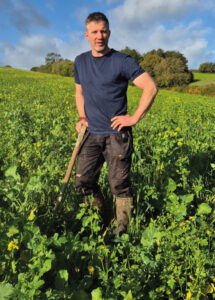
Paul Baker – NW & SM Baker
Crop mixes are key to NW & SM Baker, according to Paul Baker, with companion species sown alongside monocrop cereals and either grazed off or destroyed by frost. Split between conventional and organic crops, the business still utilises some shallow ploughing but is trialling strip-till into mustard covers to minimise soil disturbance. As well as cutting chemical usage,
Paul is also trying to limit over-application of manures, concerned about potential nutrient lock-up. The companion cropping and covers fix nitrogen and help to access nutrients from the soil.
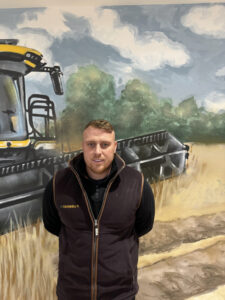
James Casswell – Rollfields Limited
James Casswell has taken steps to boost sustainability on the Lincolnshire family farm, maintaining arable cropping while bringing untenable land back into use with a willow crop that provides habitats and adds to a recent composting venture.
Cover crops are used to minimise bare soil, with livestock integrated to graze and manage these.
Manure applications have replaced synthetic fertiliser where possible, applied using variable rate; field margins have been widened to reduce run-off and improve water retention; and beehives have been added to support pollinator populations.
Colin Chappell – Chappell Farms
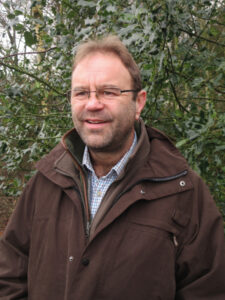 Chappell Farms boasts a carbon negative rating, and has gradually increased the area by taking on previously degraded land and bringing it up to spec with cover crops, organic nutrition and minimal tillage.
A variety of roots throughout the year has unlocked nutrient cycling in the soil, enabling nitrogen applications to be reduced by a third.
Colin notes that the farm is virtually insecticide and plant growth regulator-free as well. A combination of smart variety choice, reduced soil movement and organic nutrition has seen a 25kg CO2eq/t reduction in milling wheat, and a 1t CO2eq/ha reduction in maize.
Russell McKenzie – DJ Tebbit
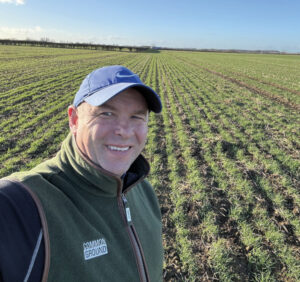 Russell McKenzie has focused on building soil organic matter across the 140ha farm, growing cover and catch crops, as well as chopping crop residues. This has led to healthier soils and a reduction in nitrogen applications (180kg/ha for winter wheat) while maintaining strong yields.
Variety and input trials are held on-farm, including biostimulants which have led to yield boosts of around 1t. Where possible livestock are integrated into the rotation and molasses are applied with fertiliser or glyphosate to balance the carbon losses associated.
The 2026 National Arable and Grassland Awards will be handed out in a ceremony at the end of the first Agronomy Exchange event. For more information, head to www.agronomyexchange.com