


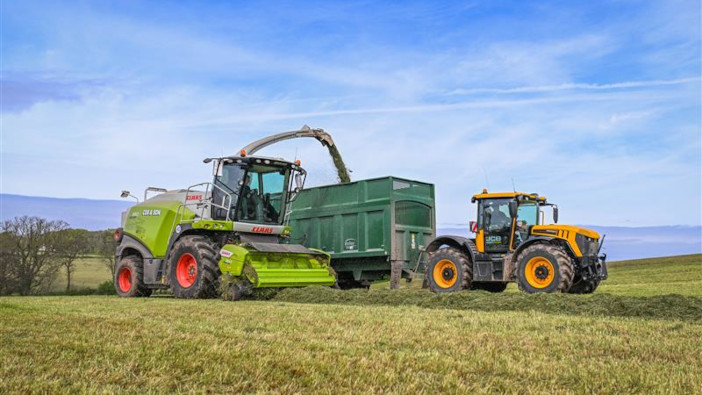
Lallemand Animal Nutrition UK & Ireland is warning growers of a potential increase in silage contamination after the wet winter.
This is especially true in fields that have not been grazed or where standing water was present. “With the ground being so wet, many farmers have been unable to graze or get onto the land, resulting in a build-up of dead thatch at the base of the sward,” explains Lientjie Colahan, forage technical support.
“This material has little to no nutritional value and will inevitably be picked up by the rake, reducing overall silage quality and bringing in fungus and yeasts that can compromise fermentation in the clamp.”
She adds that there is a likelihood of a surge in naturally occurring bacteria, which can cause additional spoilage.
“When conditions are wet for an extended period of time, it can alter the microbiome of the sward and soil, causing an increase in clostridium bacteria, which can negatively impact silage fermentation,” she says.
“Clostridium bacteria break down proteins in the silage and produce butyric acid and ammonia, which makes the forage unpalatable.”
In light of these challenges, Lientjie recommends taking an early first cut, even if this sacrifices quality and quantity, as this will enable growers to reset the sward and encourage regrowth.
“This approach puts you in a much stronger position to achieve a higher quality and more productive second cut,” she adds. “I recommend walking the fields and opening up the sward to see how much dead material is sitting underneath to help set expectations for the first cut.
“Pre-cut testing a week or two ahead of cutting will also give a good indication of quality and dry matter (DM), helping farmers to make more informed decisions on timing and set a baseline for this year’s forage.”
While it’s likely that first cuts will be poorer than hoped, an inoculant could help to mitigate losses caused by yeasts and spoilage from soil contamination.
Patterns caused by poor weather
The poor weather over the last few seasons has led to a decrease in the average metabolisable energy (ME) of first cuts, according to Lientjie.
“ME was 11.1 MJ/kg DM in 2023, which is very good, however, this reduced to 10.98 MJ/kg DM in 2024 and around 10.87 MJ/kg DM in 2025,” she says.
“This reduction in ME from 2023 to 2025 equates to over half a litre of milk per cow per day, simply due to the inherent quality of the first cut.”
While growers can not control the weather, she adds that crop and condition-specific inoculants can help make the most of silage cuts and avoid quality fluctuations.