


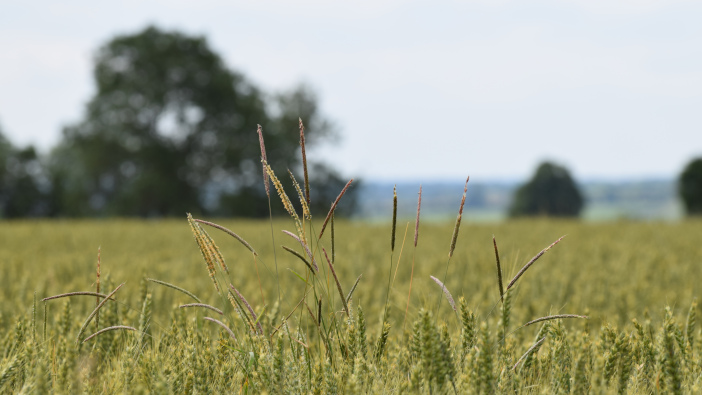
While significant progress has been made on reducing blackgrass numbers in the last decade, with Hutchinsons’ Cambourne site showing 60 plants/sq m instead of the 600 plants/sq m seen at the former Brampton site ten years ago, those small numbers still matter.
Placement fertiliser
Placement fertiliser, in particular phosphate, will offer a level of insurance, he says. “We don’t need a lot of P, but we need it available to the crop roots. We are using phosphate rather than nitrogen to drive plant growth in the early part of the season, creating a much more robust plant, which can compete with weeds much more strongly,” says Dick.
Variety blends
While some end uses may restrict blends, their use in feed wheat and barley offer the possibility to increase crop competition against blackgrass.
Trials this year compared KWS Dawsum with a blend of SY Insitor, Gleam, Champion and Dawsum and a dose of placement fertiliser. The results saw blackgrass headcounts reduced by around 60%.
Herbicide sequences
Herbicides remain key to blackgrass control, with a full-strength, sequenced programme cutting numbers by almost 20-fold compared to single active.
Timing is key, with an ongoing monitoring project showing that blackgrass emergence is now later and more protracted, commencing in early October and continuing in small numbers to mid-November.
“We’ve got to make sure we’ve got herbicide active in the soil from the first of October to the middle of November,” he says.