


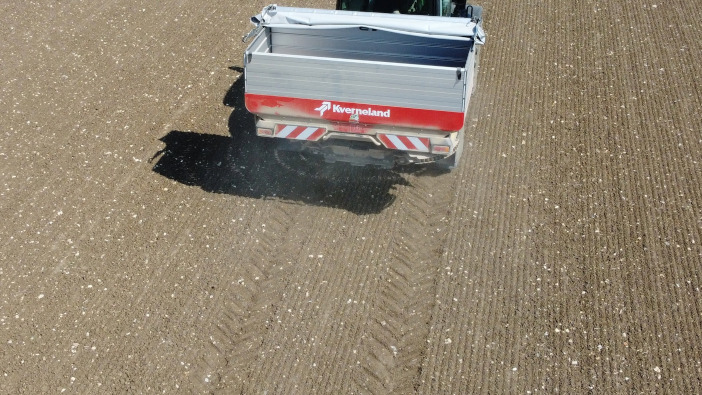
Following one of the driest summers on record, growers are advised to test for nutrient lock up in their soils.
“A lack of moisture in soil disrupts the movement of minerals and severely reduces microbial activity. Following this year’s drought, many areas in the UK will have soils that are in lock up and will need significant rainfall to recover. Knowing how much fertiliser will be needed for both soil health and plant uptake could enable growers to save thousands this year,” says Eurofins Agro specialist Shane Brewer.
He adds that knowing plant available nutrients, soil stocks and the supply capacity of the soil can provide benchmarks to accurately prescribe inputs.
“Our Fertilisation Manager test report can provide a crop-based fertiliser recommendation for over 300 crops and can be calibrated for specific crop varieties too. This is achieved by measuring the microbial biomass, microbial activity and fungal-to-bacteria ratio, to provide a kilos per hectare analysis of a field,” he adds.
In some areas of the UK, salinity and the build up of elements such as aluminium and hydrogen can also negatively affect soil health and are more common after drought.
“We have not seen such weather extremes in recent history and our soils are being damaged by conditions like flooding, drought and prolonged frosts. Using soil health data, we often see that balancing pH, optimising soil fertility and improving soil structure are just as important as simply applying more fertiliser. In short, our soils are working hard to withstand nature and we are just investing in the next crop rather than the future of our soil,” he says.
Over the summer months, as water has evaporated from UK soils, fertiliser has been locked up and will remain dormant until triggered by rain. These fertiliser minerals have become concentrated to the point of forming salt crystals that can change soil pH and make growing conditions less stable for newly planted crops.