

Farm Contractor & Large Scale Farmer
    Twitter LinkedIn
    • FREE Email Newsletters
    • About Us
    • Advertise
    • Subscribe
    • Contact Us
    Twitter LinkedIn
    Podcast
    Farm Contractor & Large Scale Farmer
    • News
      • Arable & Agronomy
      • Dealership News
      • Environmental Land Management Scheme/Policy
      • Event News
      • Health & Safety
      • Machinery
      • People
      • World News
    • Farm Machinery
      • Amenity & Maintenance
      • Cultivations
      • Drilling
      • Grassland Equipment
      • Harvesting
      • Muck & Slurry
      • Sprayers
      • Telehandlers
      • Tractors
      • Tractor of the Year
      • Tyres & Tracks
      • Whatever happened to?
    • Precision Farming
    • Markets & Policy
    • Profiles
      • National Arable and Grassland Awards
      • Company Profiles
      • Reader Profiles
    • Livestock
      • Beef
      • Dairy
      • Sheep
    • Magazines
      1. March 2026
      2. 2026 Tyre Developments supplement
      3. February 2026
      4. January 2026
      5. December 2025
      6. November 2025
      7. 2025 Agritechnica preview
      8. October 2025 issue
      9. September 2025 issue
      10. August 2025 issue
      11. 2025 Drills and Seeds supplement
      12. July 2025 issue
      13. June 2025 issue
      14. Cereals event guide 2025
      15. May 2025 issue
      16. April 2025 issue
      17. March 2025 issue
      18. 2025 Tyre Developments supplement
      19. February 2025 issue
      20. National Arable and Grassland Awards supplement
      21. January 2025 issue
      22. December 2024 issue
      23. November 2024 issue
      24. October 2024 issue
      25. September 2024 issue
      26. August 2024 Issue
      27. 2024 Drills and Seeds supplement
      28. July 2024 Issue
      29. Cereals Supplement
      30. June 2024 Issue
      31. May 2024 Issue
      32. April 2024 Issue
      33. Tyres and Tracks Supplement
      34. March 2024 Issue
      35. National Arable & Grassland Award – Meet the Finalists
      36. February 2024 Issue
      37. January 2024 Issue
      38. December 2023
      39. Agritechnica Preview Supplement
      40. November 2023
      41. October 2023
      Featured

      March 2026 issue available now

      By Matthew TiltMarch 2, 2026
      Recent

      March 2026 issue available now

      March 2, 2026

      2026 Tyre Developments supplement available now

      March 2, 2026

      February 2026 issue available now

      February 1, 2026
    • Events
    • Podcast
    Farm Contractor & Large Scale Farmer
    Arable & Agronomy

    OSR crop management decisions to be made

    Vicky LewisBy Vicky LewisMarch 31, 20233 Mins Read
    Facebook Twitter LinkedIn Email
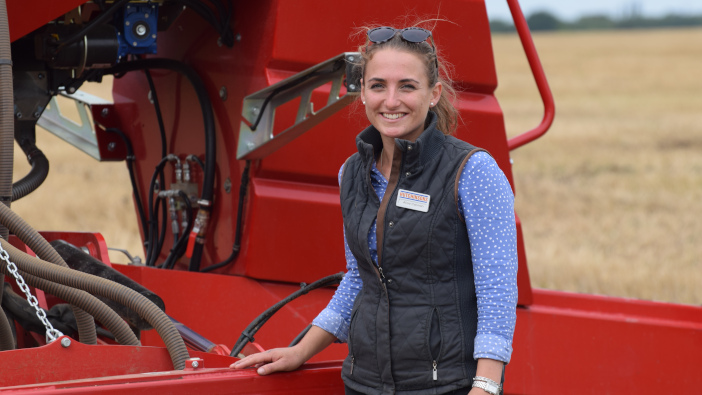
    Alice Cannon, regional technical support manager for Hutchinsons

    Crop production specialists, Hutchinsons, is advising growers that, due to varying levels of growth and development, clear decisions need to be made on how to manage OSR or they need to decide if it’s worth further investment.

    Alice Cannon, regional technical support manager based in Lincolnshire, said it is a picture of thirds: “One third of the crop looks fantastic, it has had a good start, got its roots down early and wasn’t sown at too high a seed rate, so has branched out and has strong stems – these crops are really starting to motor and we are seeing growth of about a foot in just a week,”

    The second scenario, which she believes describes the majority of crops, is where the crop was relatively late drilled, is still sitting compactly and just beginning to show signs of branching out and elongating.

    “Finally, there are those crops that looked well coming out of January but have since been devastated by CSFB or Rape winter stem weevil. Unfortunately for crops in this situation, it is important to question the viability of the crop going forward with regards to additional input costs particularly considering where market prices currently sit,” she said.

    Research from AHDB shows there are five main considerations that contribute to high yields in OSR; four of these are managed through manipulation of the crop so should be taken into account when deciding how to manage the crop going forward.

    Ms Cannon said: “Nitrogen and PGR’s are the best tools for manipulating canopy size. Firstly aim for a GAI of 3.5 at flowering for the right number of pods – this is the primary function of the PGR and a 5cm reduction in height can be easily achieved. PGR applications also help to promote more even and well-structured branching.

    “It is important to keep the crop standing – lowering crop height will help to reduce lodging. 31% of OSR lodges every year and within that figure 85% of fields have at least 10% lodged crop. For every 10% of lodged area, you can expect a yield reduction of 0.07-0.16t/ha.”

    “PGR’s also help to synchronise flowering, reducing light reflectance subsequently improving light capture by crop canopy which allows even development of pods and seed. Plants should also be kept disease free.”

    This season’s management

    Ms Cannon said that for crops with a GAI less than 0.8, there is no reason to use a PGR. These crops can be manipulated through nutrition. She said: “However, crops with a GAI of 0.8 or above, are considered to be forward and these crops should be treated with 0.75l/ha -1l/ha metconazole + mepiquat chloride or 0.5l/ha trinexapac-ethyl. If you find yourself faced with forward rape crops of GAI 2 or greater you should use more robust rates of specific PGR products and consider tank mixing with additional metconazole for increased PGR activity.

    “Crops in this situation will need 1-1.2l/ha metconazole + Mepiquat chloride, adding in metconazole (0.08l/ha Metfin 90 per crop leaf). An alternative is 0.5l/ha trinexapac-ethyl plus tebuconazole and/or metconazole or 0.7l/ha trinexapac-ethyl on its own (non-PGR fungicide added for disease).”

    Whilst triazoles have some growth manipulation it is important to keep rates high, 1l/ha of tebuconazole is needed. “Metconazole and tebuconazole have the strongest manipulation effect however this manipulation is less persistent and can be less consistent than specific PGR options,” she said.

    Tweet
    Share
    Share
    Pin
    Share. Facebook Twitter LinkedIn Email
    Previous ArticleTyres & Tracks April 2023 Supplement
    Next Article April 2023 Issue
    Vicky Lewis

    Read Similar Stories

    Yara urges growers to act now to protect waterlogged crops

    March 2, 2026

    Timac Agro launches Infolen in the UK

    March 2, 2026

    NPZ yellow pea varieties meet market demand

    March 2, 2026
    Most Read Stories

    Knight enters applicator market with new front tank developments

    March 4, 2026

    McCormick appoints Arbagri to cover Wales

    March 4, 2026

    Specialist muck event secures demonstrations amidst strong exhibitor support

    March 4, 2026
    Farm Contractor & Large Scale Farmer

    The UK's leading agricultural machinery journal

    Twitter LinkedIn
    © 2024 MA Agriculture Ltd, a Mark Allen Group company

    Privacy Policy | Cookies Policy | Terms & Conditions

    • Farmers Weekly
    • AA Farmer
    • Poultry News
    • Pig World

    Type above and press Enter to search. Press Esc to cancel.