

Tucked away down a farm track just outside Newark, Combine Fabs, run by father-and-son team Michael and Matthew Noquet, was established in 1997. Michael used his service and fabrication knowledge, along with a few contacts, to start offering spare parts and repairs for combine harvesters.
Part of this included balancing the rotors, which opened the door for expansion. “You start looking at the machines on the market that rely on balanced rotors. Hedgecutters, mulchers, muckspreaders. We were able to start building year-round work as more customers came to us with requests,” Matthew says.
Their reputation has also brought commissions from other sides of the industry. Combine Fabs has developed rotors for pulping sugar beet residues at British Sugar, as well as a flail cutting rotor for a watercress producer.
Own parts development
Using their experience with multiple brands, they also developed their own fabricated parts. This includes concaves and skids for the combine harvesters, and new rotors for other machines. Through word of mouth, they have built a customer base that covers the UK, Ireland and some international markets.
“We’ve sent pallets of stock over to France and were asked if we could ship to the US. We’re taking that expansion slowly, however, as we’d like to be there to ensure our products work in different conditions,” Matthew adds.
He says they have seen an influx of business as customers try to keep their machines running for longer. “Big farms and contractors still have that replacement policy, but the mid-sized and smaller businesses are looking to maximise their income from big-ticket items.”
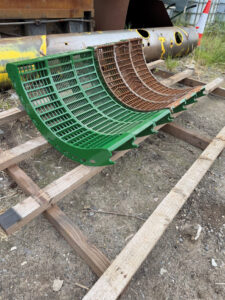 As this has happened, Combine Fabs has focused on longevity with its products. Hardox and Strenex steel are used throughout, whether for rotor repairs, concaves or skids, to limit wear during the season. They have also had to adapt to the changing climate.
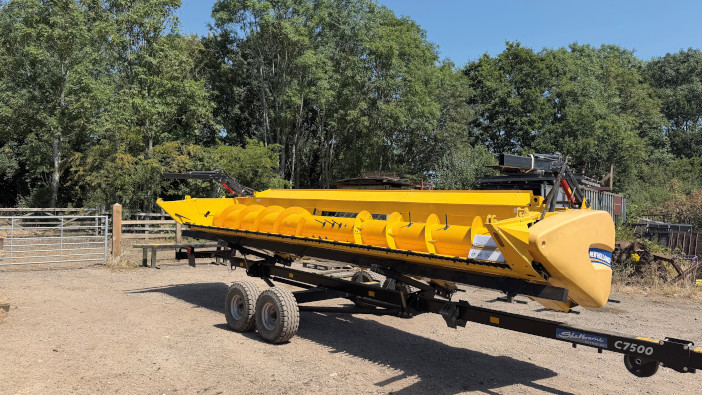
“In the hot conditions we’ve seen in the past couple of year, the crop can be baked onto the concaves, so we are looking at possible solutions for this,” Matthew says. “We’re also looking at the viability of nylon skids for the headers. These would be low-cost and would significantly limit the risk of sparks when working on stony ground.”
Maintaining growth
The business is now looking ahead to further expansion, and a more customer-facing approach. They are in the process of building a new site at Long Bennington, near Grantham, which will make access easier for lorries. It also recently became a Kramp dealer, which will It also recently became a Kramp dealer, which will allow the company to offer a greater number of spare parts.
“It fits our ethos because Kramp offers different brands to suit different budgets, and we’ve always tried to work within a customer’s budget with our own fabrication work,” Matthew says.
To keep costs down for the customer, the business has assessed which processes to bring in house and where it can work with local businesses to get the best results. Laser-cutting is done off-site in Lincoln. Matthew says this keeps outgoings to a minimum, and it rarely affects lead times on products.
“There is the occasional rush job when we wish we had our own setup, and it might be something we would consider further down the line, but on top of the machining and bending work we already do here, it would require another member of staff,” he says.
CAD drawing has been brought in house, which has significantly sped up the design of new parts and reduced costs. The firm used to work with a freelance designer, but this often required a lot of back and forth. Matthew says when he took it on, he was able to learn the process and can now test and tweak different designs quickly.
“Part of the job is learning,” he concludes. “That’s how we moved from combine rotors to flail rotors and muckspreader beaters. We saw the similarities and adapted our methods to suit, and every customer has a different requirement, so we’re constantly adapting our designs and methods to suit the various tasks.”