


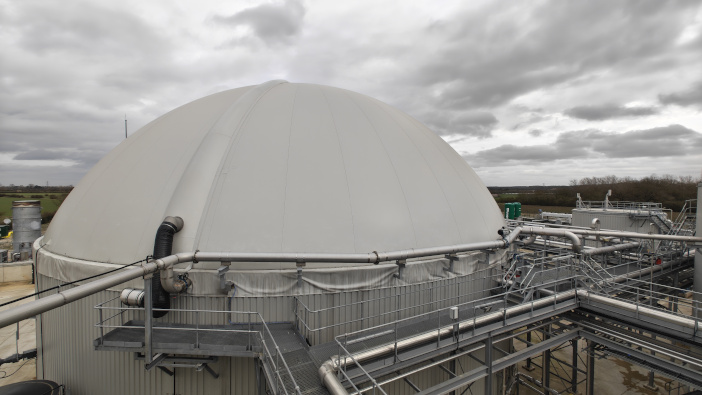
We toured the Moor Bioenergy plant near Grantham to find out how Future Biogas aims to boost green energy production while still focusing on crops such as maize
Future Biogas was established in 2010, with the aim of reducing the UK’s reliance on fossil fuels. It initially started building anaerobic digesters on contract, working with various companies to source locations and often taking on the running of the site following completion.
In 2023, it was acquired by the venture capital firm 3i Infrastructure and started the process of bringing ownership of the existing plants in-house. In 2024, 3i syndicated a 23% stake to RWE Energy, with another six sites brought under Future Biogas ownership that same year.
The company now operates 11 sites across the UK, primarily across the East of England, and extending as far north as Aberdeenshire, producing around 10% of the UK’s biomethane. This includes Moor Bioenergy, just outside of Grantham, which was completed in 2025 and is the first large-scale UK AD plant to be built without subsidies.
We met up with Tim Coombes, head of communications, at the site, who explained that the company had big plans. “We currently produce around 600GWh of energy each year, and plan to double this over the coming years. This includes new sites that will be larger than the current FB3 digesters.”
Whereas sites like Moor Bioenergy can produce between 100-120GWh per annum, the new digesters will increase output to around 170GWh. For Moor Bioenergy, specifically, the site is contracted to produce 100GWh for AstraZeneca, with the company having first refusal on any gas produced beyond that.
Interestingly, the vast majority of Future Biogas sites are crop-fed – at a time when there is discussion about how environmentally friendly this might be compared to waste-fed digesters, and potential issues around soil erosion and leaching when growing maize for AD.
“The main issue with waste is sourcing and transporting it. So much of the UK’s organic waste is already processed in AD plants. Waste also struggles with a lack of consistency, which leads to fluctuations in the amount of biogas that can be produced, and the quality of it, which is strictly monitored by the grid,” Tim says.
 Farmer first feedstocks
Future Biogas sites source crops from farms within a 15-mile radius, with around 30,000ha currently under contract across the UK. Contracts can run for up to 15 years, with prices adjusted against both fluctuations in input costs and inflation. Farmers work with the feedstock manager at each plant – Ollie Fountaine heads up that work at Moor Bioenergy – with a focus on long rotations, soil health and sustainability.
“We buy standing crops, based on the area,” Ollie explains. “This means that farmers are still responsible for choosing the best varieties for their soil, and for preparing the ground and establishing the crop.”
Future Biogas will then provide agronomy support to growers to help maximise yield. For those in their second year of a contract, this can include access to liquid and solid digestate to limit the use of artificial fertilisers. “Growers receive a proportion of the total digestate stock equal to the amount of crop they provided, which helps us develop a circular system in the area,” Ollie adds. “They only have to pay for haulage and spreading costs, and we have a list of preferred contractors for applications to ensure that it is spread responsibly.”
Digestate is sent out pre-treated with a nitrogen inhibitor to minimise volatilisation and will play a part in the company’s new Sustainability Premium, which will see farmers paid a premium for meeting certain principles. This can include keeping nitrogen applications to under 150kg/ha, as per RB209, utilising cover crops or catch crops – with Future Biogas providing the cost of undersown grass seed in maize crops – and using low disturbance establishment methods.
Harvesting is handled by a single contractor in each region. For Moor Bioenergy, this is Flawborough Farms, which also grows around 20% of the feedstock for the site. Ollie will work with farmers to monitor harvesting times, based on the weather and crop maturity.
A key part of the sustainability framework of the company is how these crops are harvested. “We use foragers and tractors and trailers in the field, but all the road haulage is handled by HGVs,” says Tim. This isn’t just for the farms on the outskirts of that 15-mile radius, but even the field next door to the site.
“Even for those short distances, it minimises diesel emissions, but more importantly enables the forager to keep moving at all times, and as we move away from the site, the HGVs provide a much greater capacity and fuel economy than a tractor and trailer, while also minimising disruption on public roads.”
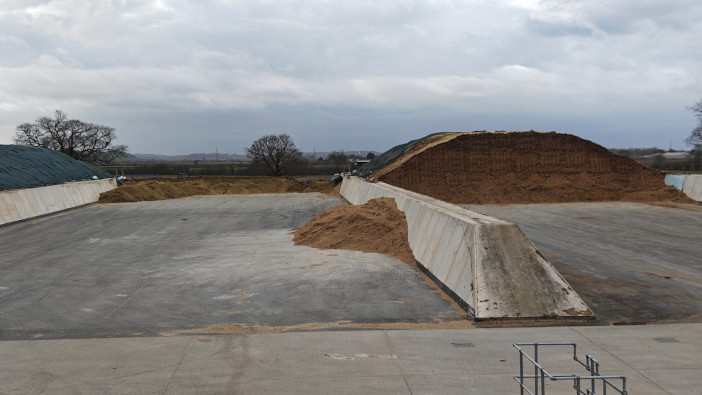
The right crops
Energy varieties of maize make up the bulk of the feedstock, supplemented with wholecrop hybrid barley, hybrid forage rye and some grass silage. Tim notes that the company is also exploring other options to suit a wider group of growers, including straw, triticale and miscanthus for growth on marginal land.
This last point is critical as questions are being asked about using productive farmland for crops not for human consumption. Tim believes that by using break crops for energy production, it’s possible for productive farmland to be both a source of food and energy.
“As land becomes an increasingly limited and valuable resource, we need to get smarter about how we use it. Debate around ‘food vs fuel’ assumes land can only do one thing – grow food or produce energy crops. In reality, land is a dynamic resource. When managed sustainably, it can do both.
“Given our model focuses on rotational crops, a single field can shift roles across seasons, delivering a broad range of socio-economic and environmental benefits.”
He further highlights efforts to increase the carbon capture potential of AD. This starts with around 4,000t of CO2 sequestered by the crop area each year (modelled using IPCC data and real-world monitoring with the Agreena system). Moor Bioenergy is one of the first sites in the Future Biogas portfolio to incorporate carbon capture from the digestion process – with all future sites designed to include this. The CO2 is filtered to a food-grade standard and sold into the food and beverage market, though the company will continue to look at infrastructure projects such as the HyNet Carbon Dioxide Pipeline to sequester this CO2 permanently.
Fugitive methane is also captured from the covered digestate lagoon and transferred back into the AD process to minimise the emissions from this. The capture of CO2 and methane, along with adjustments to how the business works with growers – incorporating more organic manures, helping growers move to regenerative practices through financial incentives – means that the gas the company is producing is low carbon and could become carbon negative.
 Increasing sites
Tim explained that crop-fed AD has the biggest potential for growth in the UK, and the company is actively planning multiple sites across the East of England, the majority of which will be the larger FB5 digesters. This will provide greater opportunities for growers to work with Future Biogas. Ollie notes that given the fluctuations in cereal prices over the last two years, some growers have seen greater profits from their contracted maize land than from their main cash crop.
This will come with some changes to the operation. Larger sites will require a larger area of crop, and while the Moor Bioenergy site is currently able to run efficiently with three 18cu m clamps, with the rest of the contracted area clamped on farms, the larger sites could be co-fed on a Just in Time basis from satellite clamps.
These purpose-built clamps will be able to hold a significantly larger amount of silage, which will be transported from the field via HGVs and then hauled to the digesters as required. A similar setup is expected to store the increased amount of liquid digestate. According to the company, this will not increase diesel emissions as the combi-liner trailers used can be used to transport feedstocks to the digesters and digestate back to storage.
Overall, diesel is expected to account for a tiny percentage of the company’s emissions, all of which could be dwarfed by the sequestering potential, concludes Tim.