

Farm Contractor & Large Scale Farmer
    Twitter LinkedIn
    • FREE Email Newsletters
    • About Us
    • Advertise
    • Subscribe
    • Contact Us
    Twitter LinkedIn
    Podcast
    Farm Contractor & Large Scale Farmer
    • News
      • Arable & Agronomy
      • Dealership News
      • Environmental Land Management Scheme/Policy
      • Event News
      • Health & Safety
      • Machinery
      • People
      • World News
    • Farm Machinery
      • Amenity & Maintenance
      • Cultivations
      • Drilling
      • Grassland Equipment
      • Harvesting
      • Muck & Slurry
      • Sprayers
      • Telehandlers
      • Tractors
      • Tractor of the Year
      • Tyres & Tracks
      • Whatever happened to?
    • Precision Farming
    • Markets & Policy
    • Profiles
      • National Arable and Grassland Awards
      • Company Profiles
      • Reader Profiles
    • Livestock
      • Beef
      • Dairy
      • Sheep
    • Magazines
      1. November 2026
      2. October 2026
      3. September 2026
      4. August 2026
      5. 2026 Drills and Seeds supplement
      6. July 2026
      7. June 2026
      8. May 2026
      9. April 2026
      10. March 2026
      11. 2026 Tyre Developments supplement
      12. February 2026
      13. January 2026
      14. December 2025
      15. November 2025
      16. 2025 Agritechnica preview
      17. October 2025 issue
      18. September 2025 issue
      19. August 2025 issue
      20. 2025 Drills and Seeds supplement
      21. July 2025 issue
      22. June 2025 issue
      23. Cereals event guide 2025
      24. May 2025 issue
      25. April 2025 issue
      26. March 2025 issue
      27. 2025 Tyre Developments supplement
      28. February 2025 issue
      29. National Arable and Grassland Awards supplement
      30. January 2025 issue
      31. December 2024 issue
      32. November 2024 issue
      33. October 2024 issue
      34. September 2024 issue
      35. August 2024 Issue
      36. 2024 Drills and Seeds supplement
      37. July 2024 Issue
      38. Cereals Supplement
      39. June 2024 Issue
      40. May 2024 Issue
      41. April 2024 Issue
      42. Tyres and Tracks Supplement
      43. March 2024 Issue
      44. National Arable & Grassland Award – Meet the Finalists
      45. February 2024 Issue
      46. January 2024 Issue
      47. December 2023
      48. Agritechnica Preview Supplement
      49. November 2023
      50. October 2023
      Featured

      November 2026 issue available now

      By Matthew TiltNovember 1, 2026
      Recent

      November 2026 issue available now

      November 1, 2026

      October 2026 issue available now

      October 1, 2026

      September 2026 issue available now

      September 1, 2026
    • Events
    • Podcast
    Farm Contractor & Large Scale Farmer
    Livestock

    Surplus lambs perform well on ewe milk replacer

    John SwireBy John SwireJanuary 8, 20183 Mins Read
    Facebook Twitter LinkedIn Email

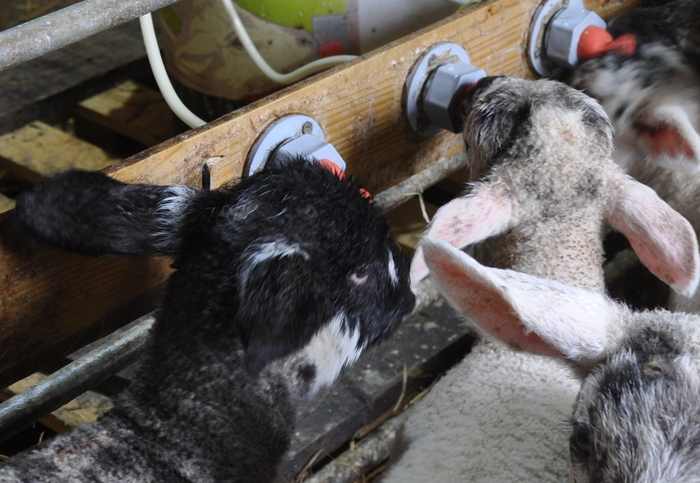
    Surplus lambs reared on performance-formulated lamb milk replacer, based on whey protein from cow’s milk, do just as well as lambs running naturally with the ewe.

    A study carried out at IBERS, Aberystwyth University, reports that the use of a colostrum alternative followed by good quality lamb milk replacer facilitates the successful rearing of surplus lambs. Lambs reared on milk replacer reached similar weaning weights to their naturally-reared counterparts and, when killed out, both carcass weight and conformation were comparable to that of lambs reared on the ewe, despite a slightly lighter body weight at slaughter.

    “The results of this trial clearly show that sheep farmers should be confident about rearing surplus lambs on performance-formulated lamb milk replacer, provided care is taken to maximise rumen development before weaning for lambs reared on an ad libitum system,” said Volac research scientist Dr Jessica Cooke.

    The results will be encouraging for the many sheep producers who have invested recently in automatic feeding of surplus lambs.

    “Enquiries about automatic milk feeding are at an all-time high in the sheep sector. Like calf rearers, farmers are undoubtedly attracted by the labour-saving benefits and the fact that machine-rearing frees up time to focus on other important jobs. But they also report faster growth rates because there is no limit to how much or when the lambs can drink,” said Volac nutritionist Abi Erian.

    Ms Erian added that it makes good sense to plan ahead for lambing this season and re-examine current surplus lamb rearing practices. “Basically, you have three options come lambing time: you either sell your extra lambs to someone else to rear, foster your surplus lambs onto a single-bearing ewe or artificially rear them on milk replacer.

    “If you intend to rear as many as you can to maximise your finished lamb sales, it’s good practice to take any third and fourth lambs off their mothers. This will help boost lamb survival rates and performance, and take the pressure off ewes trying to rear multiples. This is particularly important for young mothers and will help her keep growing and producing enough milk for the lambs she has left.”

    When deciding which lamb to remove from a triplet-bearing ewe, Ms Erian advised removing either the smallest or the largest one to leave a balanced pair. “Whichever lamb is chosen it must be sucking well, been with its mother for 24 hours after birth and have received a good supply of colostrum, particularly in the first six hours of life.”

    However, Volac stressed that machine rearing, whilst saving substantial time and rearing hassle, is certainly no substitute for good husbandry.

    “The IBERS trial highlighted the importance of maximising rumen development while rearing surplus lambs on ad libitum milk replacer. But sound hygiene is also crucial and lamb pens must be draught-free, and well drained and bedded to keep lambs as warm and dry as possible. In addition, clean, fresh water must be made available along with creep feed (18% crude protein) offered ad lib to encourage early intake. Follow these guidelines and you can be confident in rearing those extra lambs highly cost-effectively with margins of £15-£25 a lamb being achievable (over lifetime feed cost), based on previous years’ lamb prices,” Dr Cooke said.


    Tweet
    Share
    Share
    Pin
    Share. Facebook Twitter LinkedIn Email
    Previous ArticleGove: British Veterinary Association respond
    Next Article New cab option for Landini’s 68-88hp ‘workhorse’ 4-D Series tractor
    John Swire

    Read Similar Stories

    Quicke updates Q-Companion system

    November 23, 2026

    Faresin shows pre-series autonomous feeder wagon

    November 19, 2026

    November 2026 issue available now

    November 1, 2026
    Most Read Stories

    MF launches new range of larger 7S tractor models

    November 26, 2026

    Valtra sees in 75 years with updated T-series

    November 26, 2026

    New Landini utility tractor shows direction of travel for Argo

    November 26, 2026
    Farm Contractor & Large Scale Farmer

    The UK's leading agricultural machinery journal

    Twitter LinkedIn
    © 2024 MA Agriculture Ltd, a Mark Allen Group company

    Privacy Policy | Cookies Policy | Terms & Conditions

    • Farmers Weekly
    • AA Farmer
    • Poultry News
    • Pig World

    Type above and press Enter to search. Press Esc to cancel.