

Limagrain is urging farmers to consider the cost of straw as rising demand from the livestock sector and biomass markets combines with a tighter supply.
“Profitable and sustainable farming is increasingly about making every hectare work harder,” says Heather Oldfield of Limagrain. “When straw values are contributing a substantial proportion of a crop’s income, growers need information that looks beyond grain yield tables.”
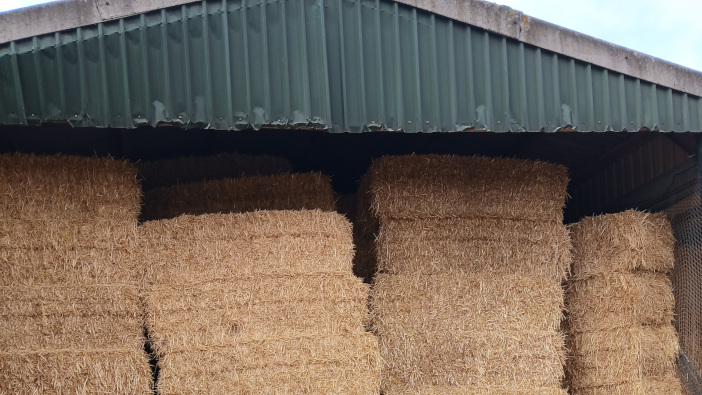
At the start of 2026, wheat straw was trading at £66 per big Hesston bale. According to the AHDB, this has increased to between £70 and £92 depending on region, while barley straw is trading at around £86 per large square bale.
It’s reported that straw income is now running close to grain income in some areas.
Straw is central to Grasby House Farm, which runs a rotation of sugar beet, potatoes, winter barley and spring barley. Barley is grown for seed, while the straw is sold into Cherry Valley.
“Quality has to be consistent, which means variety choice matters as much for straw length and brightness as it does for grain performance and yield,” explains George Thompson.
“This year, the farm brought in around 15 bales/ha, within its usual target range of 12 to 20 bales — worth roughly £247/ha in additional income on top of the seed crop itself.”
Looking at varieties
Trials are carried out on farm. This year, one 4ha plot was drilled with a six-row hybrid against another similar field with Limagrain’s LG Caravelle.
“LG Caravelle produced significantly more straw than the hybrid, and the quality gap was just as noticeable — the hybrid’s straw simply didn’t match what came off the Caravelle. So we are justified in our decision to grow the variety for our straw business.”
According to George, getting the crop right is only half the job, with straw needing to be stored properly. It is kept on pallets, is rodent-free and, as concerns over bird flu continue to rise, is sheeted and covered in transit.
“Straw is my all-year-round bread and butter,” says George. “But that does mean it has to be stored well but the extra value to the crop from the straw is well worth the effort.”
Straw isn’t a commodity to every grower, however, and Ryan McCormack, at Dennington Estate, says that its value is part of the whole farming system.
“I look at where in the rotation the crop fits, what it’s following, how it’s going to be cultivated, and whether it’s going to be chopped or baled- all of which have associated costs.
“Leaving straw in the row rather than baling it can save on additional combine costs. Chopping it, meanwhile, brings its own trade-offs: it can push up cultivation costs for the following crop and increase slug pressure, so in some situations, removing the straw altogether is the more cost-effective route.”